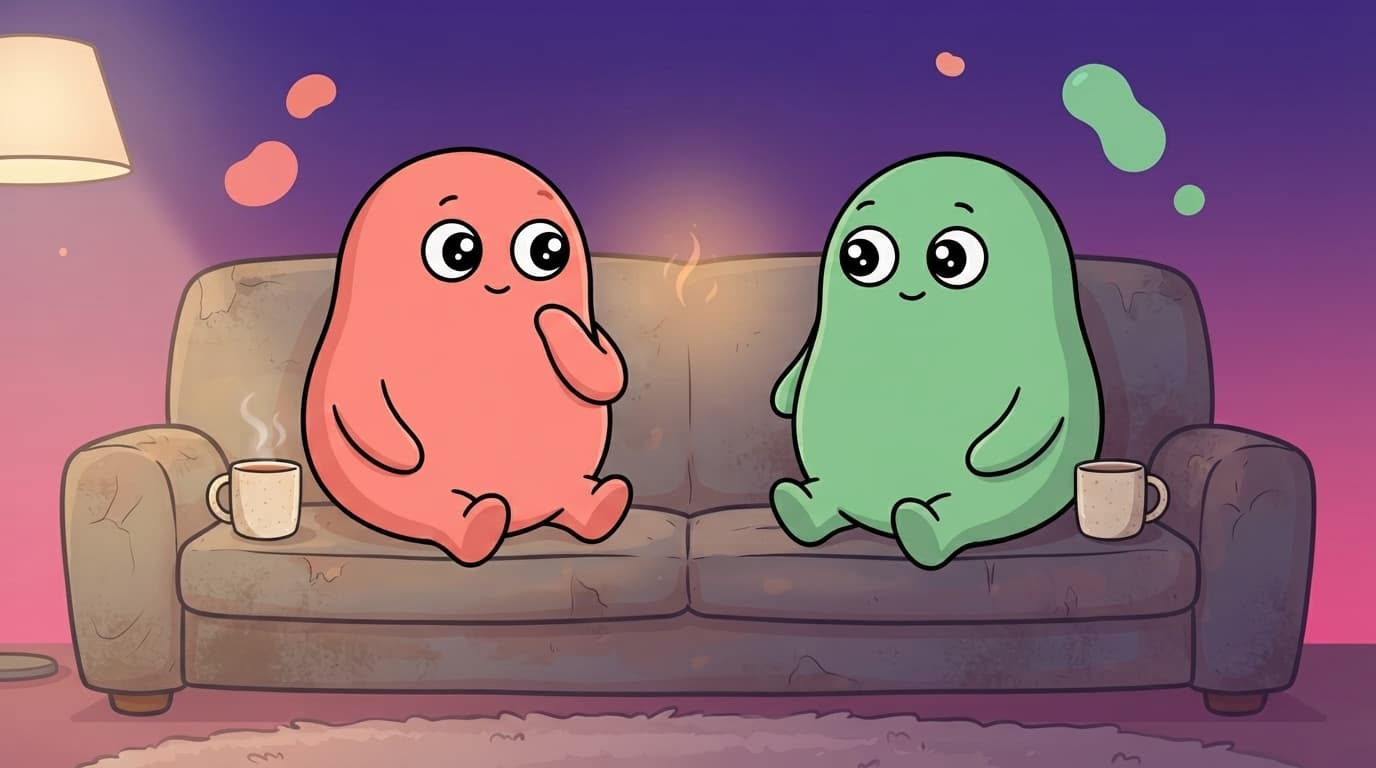
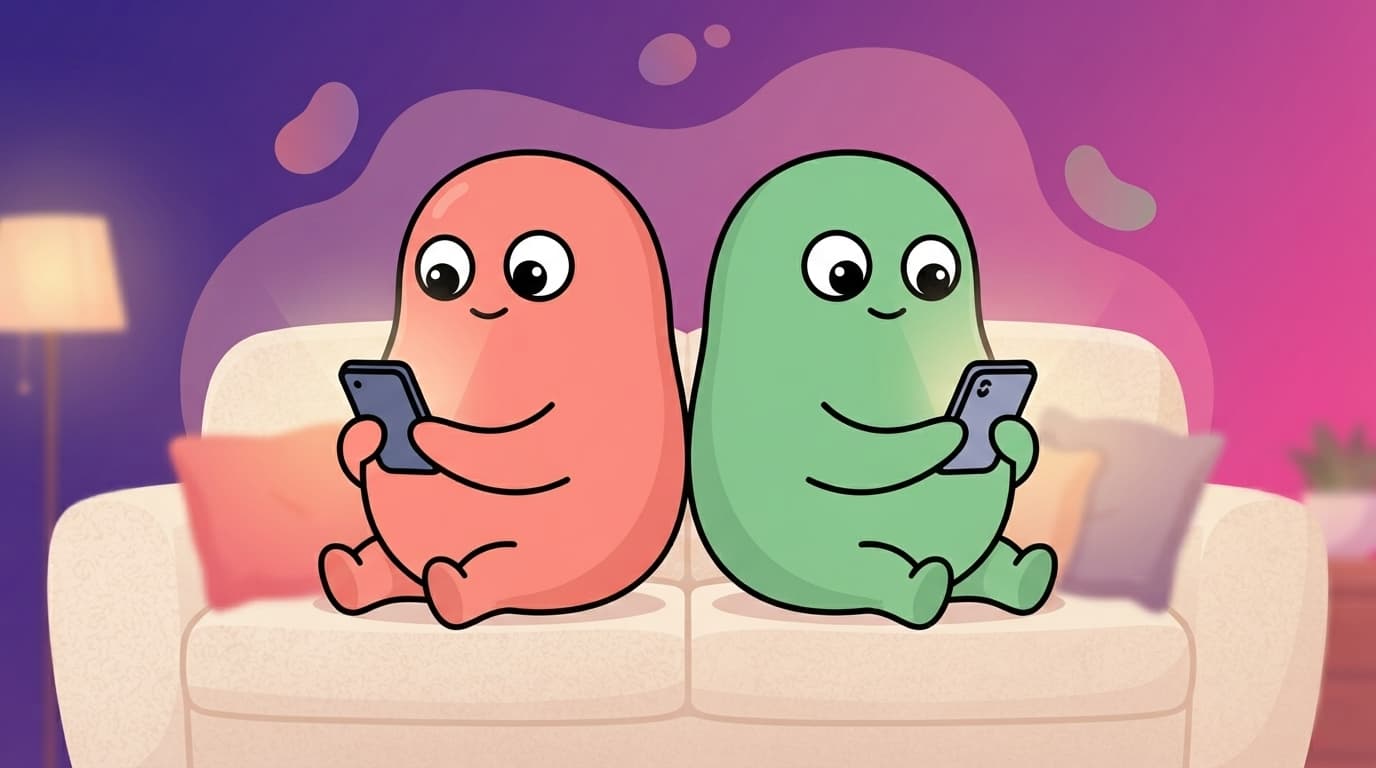
You've been together long enough that quiet stopped feeling like a phase and started feeling like the new normal. Not a fight, not a falling out. Just months, maybe years, of both of you quietly pulling back, until you've privately used the word roommates at least once. And somewhere in there, probably around 11pm on an ordinary Tuesday, you've wondered whether this is just what happens eventually, or whether you let it happen.
Here's the honest answer: you don't need a grand gesture or a big serious talk to bring the spark back. You need small, low-stakes moments where one of you learns something new about what the other actually wants, the kind that don't ask anyone to go first and risk a no. Novelty is the ingredient long-term couples run out of first, and it happens to be the easiest one to put back.
This isn't about spicing up a mildly quiet Tuesday. If it's gone quiet long enough that you've half-wondered whether you're still compatible, whether reaching for each other is even worth the risk anymore, that's exactly the couple this is for.
Why do long-term couples stop surprising each other?
Not because you got lazy, and not because you did anything wrong. Reaching became fraught, so you both quietly stopped. When it's been quiet a long time, the problem usually isn't that you don't want more. It's that one of you initiates and braces for the "not tonight," the other feels the pressure and freezes, and every attempt lands in the same painful loop. So you both stopped reaching, to protect yourselves. That's not a character flaw. It's self-preservation.
There's a quieter reason underneath, and it's worth naming. Jack Morin, a psychotherapist who spent his career studying what fuels desire, found that eroticism wants a little distance, a little mystery, the thrill of not quite having someone figured out. After a decade you know each other's coffee order, which side of the bed, the exact face they make before they say something annoying. That closeness is the good stuff. But you built so much of it that you paved right over the mystery, and the not-knowing was doing more work than either of you realised. That's the puzzle at the heart of rediscovering a partner you know inside out: there's nothing left to find out, and that's precisely the problem.
So the trap is thinking the "fix" is more closeness. More date nights, more talking, more trying harder. Connection matters, but on its own it can make the flatline worse, not better. What's actually missing is the surprise.
What if we can't even talk about this anymore?
Then don't talk about it. Not yet.
The way out isn't another heavy conversation, the kind that's ended badly every time. It's a mechanism that takes going first off the table entirely. That's the whole idea behind peek: you each swipe privately, on your own phone, and you only ever find out what you both said yes or maybe to. No one has to expose themselves first. There's no scorecard, no quota, no loaded "so are we doing this or not." Just two people answering honestly in the dark, and a match that's proof the spark was buried, not gone.
If skipping the conversation entirely still feels like a stretch, there's a gentler version worth trying first: reopening intimacy without one big conversation.
If you've stopped reaching because you're tired of being the one who reaches, this isn't a campaign to talk you into anything. Nobody sees your no. A pass is invisible, no conversation owed. You only ever surface next to your partner on the things you both, separately, wanted. There's no "so I noticed you swiped yes to" waiting on the other side, because there's nothing to point to. That's the point.
That matters more than anything else here. The first mutual match isn't a task or a to-do. It's a small, mutual surprise inside a very familiar relationship, and for a couple who'd half-convinced themselves the attraction had left the building, that's the thing worth believing in again. This same going-first problem shows up any time the quiet's crept in, so even if your life looks nothing like it, the gentler ways couples find each other again after kids run on the exact same move: find one small thing you both said yes to, and start there.
How do you add surprise without it feeling forced?
You don't schedule spontaneity or announce a "we need to be more adventurous" campaign. Both land with a thud, the same way routine quietly swallows a couple's sex life once novelty stops showing up. What actually works is tiny, low-stakes doses of new information about each other, the kind that make one of you go "wait, really?"
Here's what that looks like in a long-together relationship:
- Ask a question you've genuinely never asked. After this many years you assume you know all the answers. You don't. People change, and the things they'd try now aren't the things they'd have said at 27.
- Reveal something before you're sure of the reaction. A small want, a curiosity, a maybe. The mystery lives in the reveal, not the resolution, which is the same gap anticipation runs on.
- Let the discovery be mutual. Surprise you deliver at your partner is a performance. Surprise you find together is a spark.
- Keep it playful, not heavy. A wink beats a summit. The second it feels like homework, the brakes slam on.
- Keep it small. One tiny new thing beats one big adventurous night you'll both dread scheduling. No quota, no streak to keep. Whenever curiosity turns up is often enough.
Key takeaways
- If you've gone quiet for months or years and wondered whether you're still compatible, it's almost certainly not too late. The attraction is usually buried, not gone.
- Long-term couples stop surprising each other because reaching became fraught, so both partners quietly stopped, to protect themselves. Nobody's the villain.
- More closeness isn't the answer on its own. Small, low-stakes hits of novelty are what reopen the gap desire needs (Jack Morin, psychotherapist).
- When it's gone quiet, skip the heavy talk and use a mechanism that removes who-goes-first, so nobody has to expose themselves or be talked into anything.
- A shared match is proof the attraction is buried, not gone, which is the thing this kind of couple most needs to believe.
If talking about it keeps going nowhere and you'd rather have a mechanism than another mood, peek gives you a private, no-pressure way to rediscover what you both still want, without anyone having to reach first. Start with a 30 day free trial on the App Store and Google Play. Swipe on your own, find out what you both said yes or maybe to, let the surprise do the rest.
Frequently asked questions
Is it too late for us if it's been quiet for years?
Almost certainly not. You're not manufacturing chemistry from scratch, you're clearing room for it. The attraction rarely leaves, it just gets buried under everything you already know about each other. Add a little new information and a little space, and it tends to resurface. Quiet for years isn't the same as gone.
Will this turn into my partner's campaign to pressure me?
No, and peek is built specifically so it can't. You each swipe privately, nobody sees your passes, and you only ever surface on the things you both, separately, wanted. There's no "so are we doing this or not" waiting on the other side, because there's nothing to point to. A no is just a quiet no.
We've tried a lot of things that didn't work. Why would this be different?
Because most of what couples try, more talking, scheduled sex, trying harder, still asks someone to go first and risk the rejection. peek is built the other way round. You both answer privately and only ever see what you both wanted, so the loaded initiation moment that's been failing you simply isn't there.
Is peek therapy?
No. peek isn't therapy or medical advice, it's a playful way to spark discovery between the two of you. Some couples use it alongside seeing a therapist, and that's completely fine.