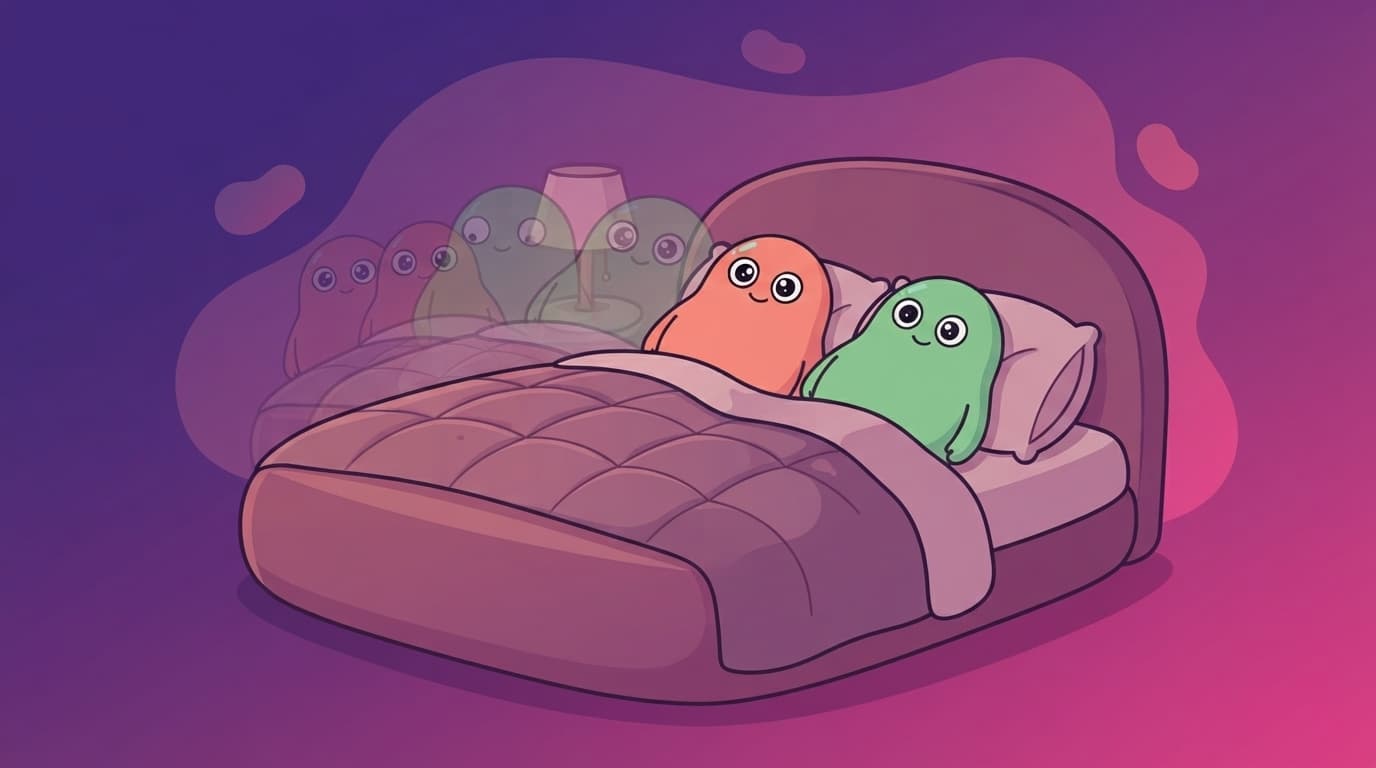
Same time, most nights. Same order. Same little rhythm you've somehow both memorised without ever once agreeing to it out loud. Nothing's actually fighting-shaped, which might be the strangest part. Nobody's pulling away and nobody's said a word, but you can feel the shape of a pattern setting a little more every week, barely a year in, back when you assumed this part would still feel brand new for a while yet.
Here's the plain version, since you don't need to sit with this for a month wondering what's wrong: your sex being the same every time isn't a problem so much as a script you got good at running. The move isn't more effort or a long talk, it's novelty in small deliberate doses. Change one variable and desire has somewhere new to land, because desire runs on surprise, not repetition. Even the loveliest thing on repeat eventually starts to read like a rerun.
Why does our sex feel the same every time now?
Because you built something that worked, and then you kept building it the same way. The first time an approach landed, you naturally ran it back. By the tenth time, it's just how you do things. That's not a red flag. It's what happens when two people get properly comfortable with each other. The catch is that comfort and desire pull in different directions. Closeness wants the familiar and the reliably good. Desire wants a bit of distance, a bit of mystery, something it hasn't already mapped out in advance.
Jack Morin, a psychotherapist who spent decades studying what actually turns people on, found that desire needs some measure of distance and the unknown to stay alive. It can't run purely on comfort. That's not a verdict on your relationship, it's just how wanting works. The brake here is too much predictability. The accelerator you're missing isn't more of the good stuff you already have memorised, it's the small unknown.
How do we break the routine without turning it into a whole conversation?
You don't need to announce it. Treating this like a summit with an agenda is exactly what makes it heavier than it has to be. It just needs one small deliberate swerve, then maybe another one next month. Shift the context even slightly and desire gets somewhere fresh to show up.
Pick one thing to move, not all of them at once:
- When. If it's always the tired tail end of the night, try a lazy Sunday afternoon instead.
- Where. The bedroom isn't the only room in the place. A new setting resets the whole feel of it.
- Who starts. If it's always the same person leading, swapping that changes the entire dynamic without a word said.
- What comes first. Reorder the opening. The bit you always save for last is a completely different night if it goes first.
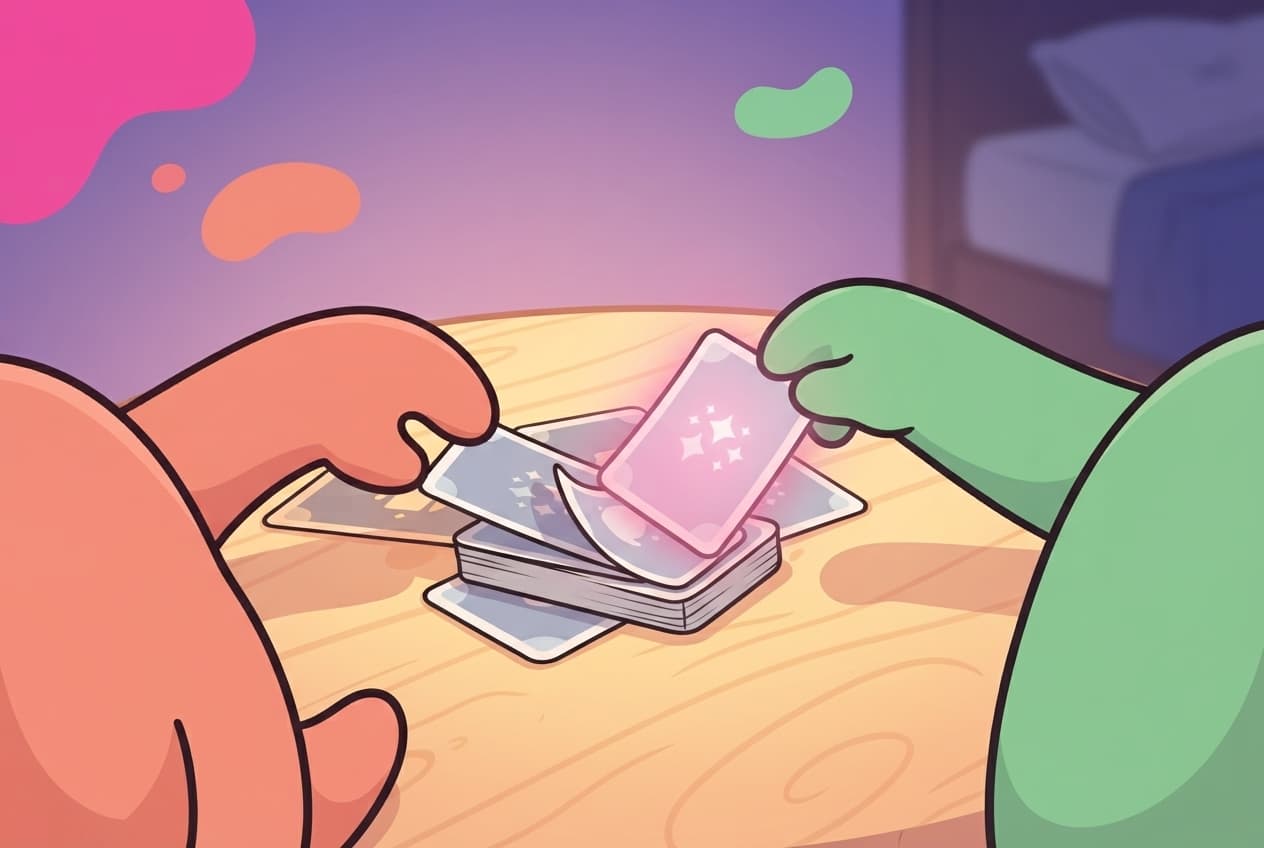
- What you try. One new thing you're both a little curious about is plenty. It doesn't need reinventing, just a fresh card in the deck.
This isn't a demolition job on what already works. Keep everything you love and swap one variable so the whole thing feels new again. Novelty in small doses, not a whole new relationship.
How do we bring it up when nothing's actually wrong?
This is the actual knot. Saying "can we switch it up" when things are already good feels like you're implying they're not, and you're not, so how do you say it without it landing as a critique of everything you already do together. Skip the frame where this is a "fix." Frame it as curiosity instead. "I found this thing, want to try it this week" is a completely different sentence to "we need to talk about our sex life," even though they're chasing the same outcome. And if something genuinely isn't working for you, raising it without it landing as criticism is its own gentle skill.
That's roughly why couples reach for peek right at this stage. You each swipe privately through cards, and only the ones you both mark "yum" become a match. Nobody has to be the one who raises it over dinner. Nobody's being critiqued. And the reveal that you both want the same new thing does the talking instead. If going first is the sticking point, going first without the pressure that usually comes with it tackles the same knot from a different angle: take the risk out of asking and asking gets easy. Building the habit now pays off later too, since finding your way back to each other after kids leans on exactly this kind of small-habit thinking under real pressure, and the couples who manage it best are usually the ones already swapping variables long before they needed to.
Getting the habit going now, while things are still loose enough to shape, is the whole upside of catching this early. You're not repairing anything. You're tending it before it ever needs repairing, which is a much nicer job.
Key takeaways
- The same sex every time is a script, not a problem. Early scripts are the easiest ones to rewrite.
- Desire needs distance and a little novelty, not more repetition (Jack Morin).
- Change one variable at a time: when, where, who starts, what comes first, what you try.
- Frame it as curiosity, not a "fix," so it never reads as a critique of what you already do.
- Swiping privately lets you both surface "let's try something new" without either of you going first.
Want to shake up the pattern without the loaded conversation? That's the whole idea behind peek, and it's free on the App Store and Google Play. Catch the script while it's still fresh and be the couple who never quite let it set.
Frequently asked questions
Is it normal for sex to feel the same every time after a year?
Completely. It usually means you've found what works and started running it back, which is what comfortable couples do. The good part is you've caught it early, while the pattern's still easy to nudge instead of a groove you have to climb back out of later.
Does the same routine mean the spark is gone?
No. It usually means your closeness got ahead of your novelty, and novelty's the easier one to top up. The attraction hasn't gone anywhere. It just wants something a little new to point itself at, which is smaller than it feels from the inside.
How do we add novelty without it feeling forced or performative?
Start small and start playful. Change one variable, or swipe through a few cards together and let a shared "yum" choose the direction for you. When the newness comes from both of you at once, it lands as fun rather than something either of you has to perform.