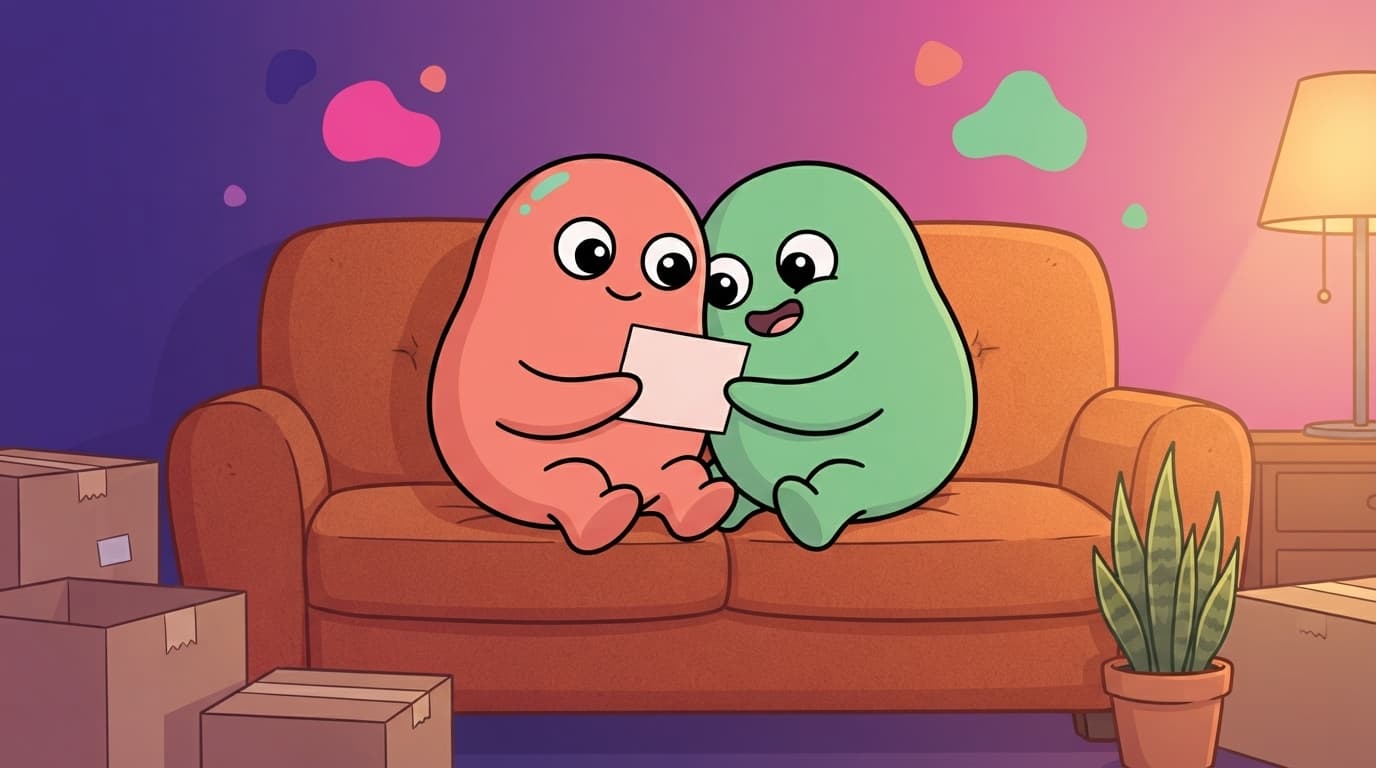
You've swapped all the big stories by now: how you each grew up, the exes, the dream jobs, the childhood dog. So lately the questions have shrunk to logistics. How was your day, did you call the plumber, what do you fancy for dinner. Nothing's wrong. It's just gone a little quiet a year in, and you can feel a script starting to set, and you'd love to feel close again without sitting each other down for a heavy talk about it.
The best question games for couples are the ones that hand the good questions back: prompts that skip the logistics and go straight for what you're curious about, what you'd try, what you've never quite said out loud. The ones that land are mutual, they build gently from easy to bold, and "pass" is always on the table. The game asks the brave thing so neither of you has to.
What makes a question game actually bring you closer?
Two things, really: a little novelty and a little nerve, shared evenly between you. A good prompt hands you something fresh to be curious about, and it quietly lowers the stakes on saying the thing you'd never have volunteered on your own. That's the broader case for why playing games together makes couples closer than another serious conversation does.
That second part is why these games work at all. Sue Johnson, a clinical psychologist and the founder of emotionally focused therapy, put her finger on what actually lets couples open up: feeling emotionally safe. Knowing that when you reach for your partner, they'll reach back. You don't crack open the tender stuff because you've decided to be brave that night. You do it because it feels safe to, and a good question is a small, low-risk way to reach and be met. You answer an easy one, get a warm answer back and the next feels a bit safer to ask. That's the whole engine, and it's why the giddy early months settling into something calmer is completely normal a year in, not a sign anything's wrong.
Here's what separates a game that lands from a stack of small talk:
- It's mutual. You both answer everything. No one's on the spot being interviewed.
- It builds up gently. Start warm and easy, earn your way to the bolder stuff. Don't open on your deepest fantasy.
- It's got no wrong answers. "Pass" is always allowed, which is exactly what makes people brave enough not to need it.
- It surprises you. It's an invitation to play, not a quiz to pass. If you can predict every answer, it's a test, not a game.
- It's low-effort to start. The best ritual is the one you'll actually come back to, not the one that needs candles and a free evening.
What are the best question games for couples to try?
Here's a spread, from gentlest to boldest, so you can pick your temperature for the night.
| Game | The vibe | Best for |
|---|
| The 36 questions | Slow-building, genuinely intimate | A long drive or a lazy Sunday |
| This-or-that rapid fire | Fast, silly, low-stakes | Warming up or a giggly ten minutes |
| "Never have I ever," soft edition | Cheeky, confessional | When you want to nudge the temperature up |
| Two truths and a wish | Playful, forward-looking | Surfacing something you want to try |
| A swipe-based prompt deck | Private, mutual, no going first | Anything you'd feel shy saying face to face |
That first one is real and worth knowing. The 36 questions are a well-known list a pair works through in order, each one a little more personal than the last, and people come out the other side feeling startlingly close. It's not magic, it's structure: the list does the escalating so you just answer the next one.
The rest are lower-commitment and just as good on a weeknight. This-or-that ("morning or midnight, big night out or big night in") is pure warm-up, no nerve required. A soft "never have I ever" lets you hint at what you're curious about without announcing it. And two truths and a wish sneaks a real want into the mix, which is often the thing that's hardest to say straight. If saying it straight is the sticking point for you two, there's a gentler route into asking for what you want without it sounding like criticism.
Keeping any of these going once the novelty fades is less about the questions and more about a tiny habit you both look forward to, and staying interested in each other on purpose is most of what keeps attraction alive years in. Pick a night, keep it short and let it be the low-effort version you'll actually return to, not the big-production one you do once and abandon.
How do we go from cute questions to what we actually want?
Carefully, and ideally without either of you being the one who says it first. This is the bit that gets tricky at your stage. Early on, anything felt sayable because nothing was settled yet. Now there's more built between you, and "hey, I'd love to try something different" can accidentally land like a note on the relationship instead of a fun idea. So the volunteering quietly stops, and the script sets.
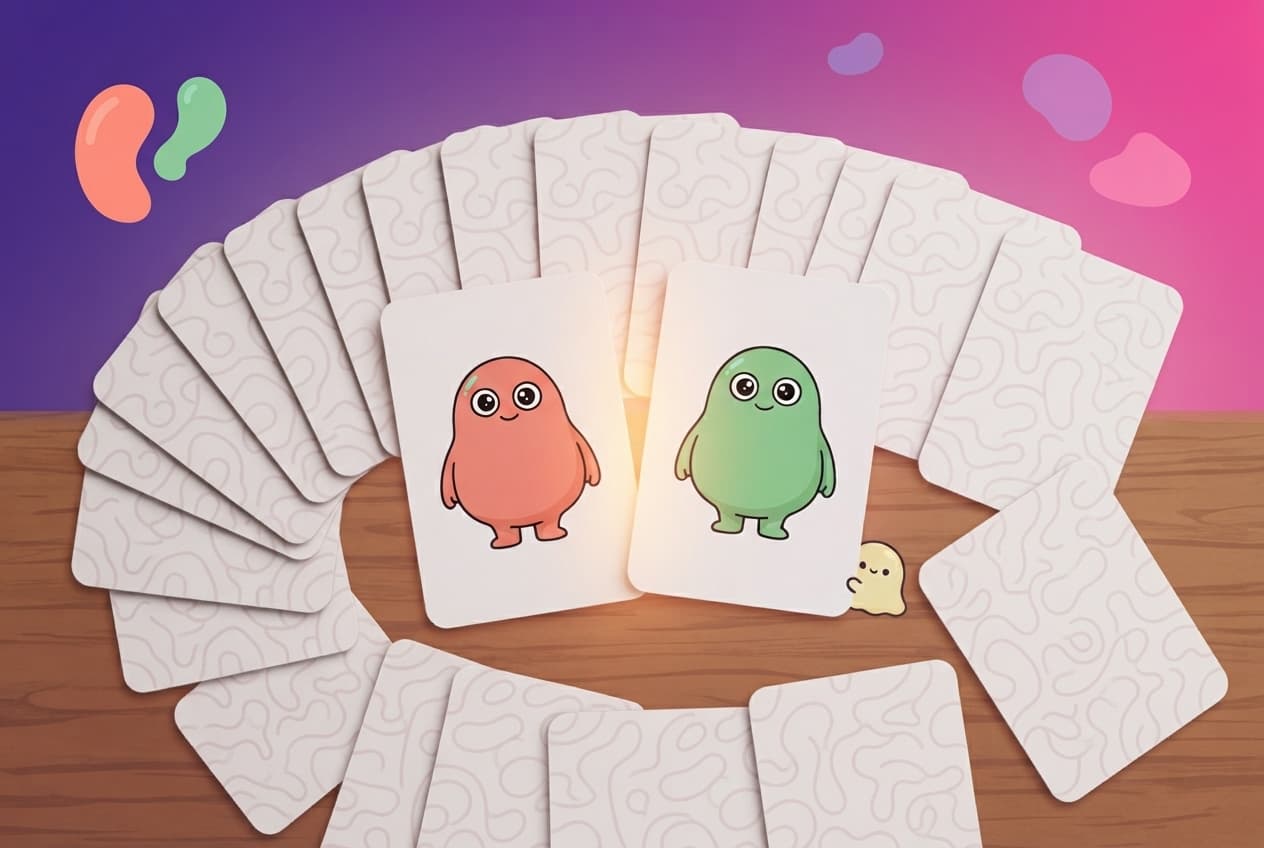
What helps isn't more courage. It's a format where neither of you goes first. That's the gap peek is built for: you each swipe privately through cards (playful ones, curious ones, some bolder ones) and nothing surfaces unless you both land on the same one. Then it's a match you explore together, and the thing you were both quietly wondering about is just out there, shared, with no one having had to be brave. The card carried it. It works like a private, playful question game, except the shy questions get answered too.
And the same trick keeps working long after the moving boxes are gone, when life gets busier and the openings get rarer. Building a tiny habit now, while it's easy, is one of the surest ways to catch a script before it quietly sets in, and it's already yours when you need it most.
Key takeaways
- The best question games for couples trade small honest answers both ways: mutual, gently building from easy to bold, with "pass" always on the table.
- Feeling safe is the active ingredient. When reaching for your partner reliably gets a warm answer back, the next question feels safe to ask and closeness builds from there.
- The 36 questions work because the escalation is built in, so you never have to decide how far to go, you just answer the next one.
- Going from cute to candid gets easier when neither of you has to volunteer first. A private mutual format lets the prompt do the brave part.
- The point isn't a perfect deep talk. It's a small, repeatable bit of fun that keeps you learning each other before the script sets.
Ready to skip the who-goes-first part entirely? peek is a private, playful place to explore this together: you each swipe on your own, and a shared yes or maybe becomes a match you can talk about when you're ready. It starts with a 30 day free trial on the App Store and Google Play. A good next question is one you both already said yes to.
Frequently asked questions
What are good deep questions for couples who've been together a while?
The ones that assume you don't already know the answer. Try "what's something you've gotten more curious about lately?" or "what's a version of us you'd love to try?" Skip the résumé questions you covered in month one and aim for what's shifting now.
How do we play a question game without it turning into a serious talk?
Keep it turn-based, keep it short and let either of you pass on anything. The moment it starts feeling like a test, stop and switch to something sillier. Fun is the format, not a warm-up to the "real" conversation.
Is peek a question game?
Sort of, and better for the shy stuff. Instead of asking each other out loud, you each swipe privately and only matches surface. So the questions you'd never quite say face to face can still get answered, without anyone going first.