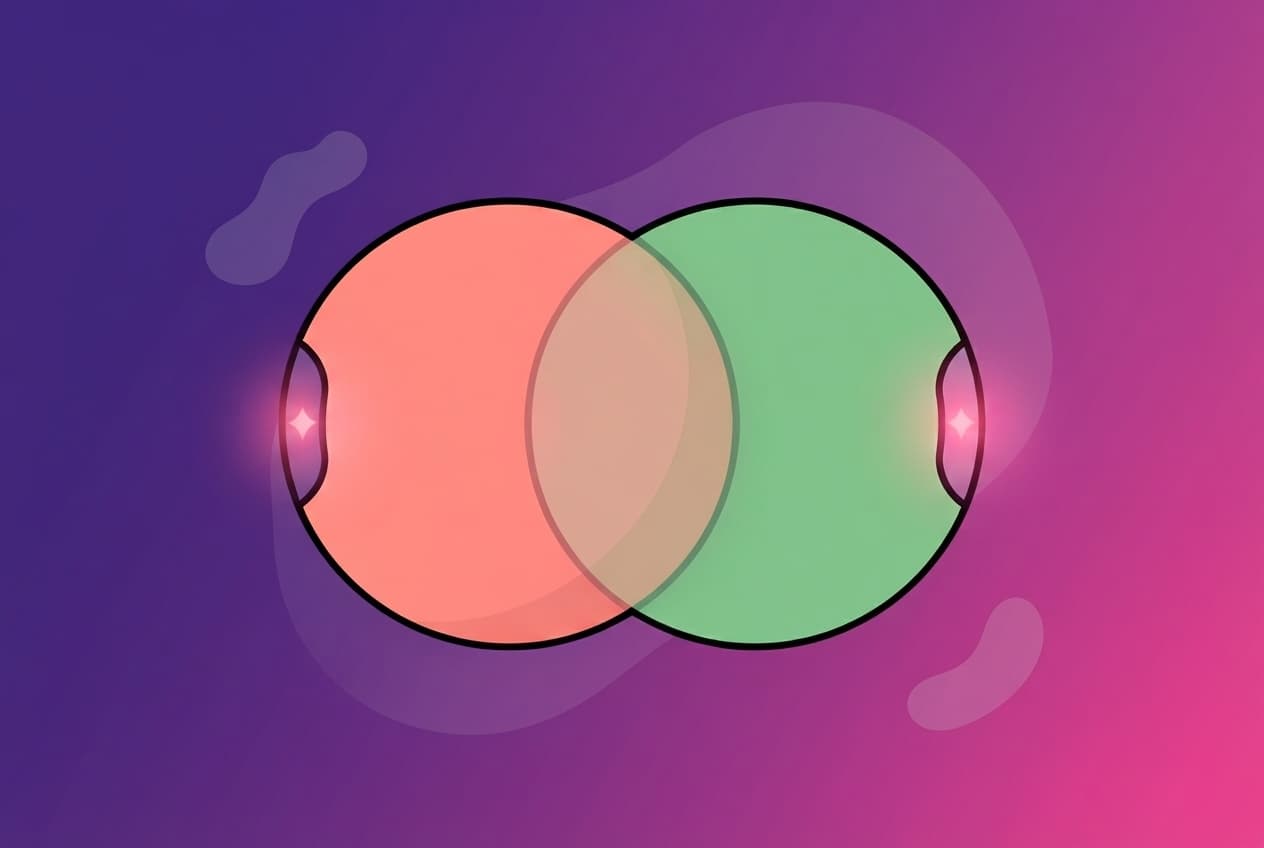
You two have basically got it figured out. Great talkers, best mates, the couple your friends quietly want to be. And somewhere in the middle of all that, without a fight or a moment you could point to, the physical side went quiet. Neither of you is devastated about it. But you've both clocked the gap between how close you feel and how alive things feel between the sheets, and it's been sitting there long enough that someone keeps almost bringing it up and not quite managing it.
Here's the actual answer: the closeness didn't kill the spark, it swallowed the gap the spark needs to cross. Esther Perel, a psychotherapist, has long made the point that the comfort and deep emotional closeness that make affection easy run on different fuel than erotic desire, which also wants a little distance, novelty and the chance to see your partner new. So being very close and still barely touching isn't a fault in the two of you, it's a known paradox. The closer and more seamless you get, the less room desire has to reach across.
Why did the physical part fade when we got closer, not further apart?
Because the exact thing that makes you brilliant flatmates is the thing that mutes the charge. Worth sitting with, because it's the opposite of what you'd expect.
Emotional closeness runs on predictability. You know his coffee order, his tells, how the story ends before he tells it. That's most of what makes a partnership feel like home, and it's solid. But desire wants the opposite: the unfamiliar, the not-quite-known, the version of him you haven't fully catalogued yet. Attraction tends to need a bit of an obstacle or a bit of longing to have something to close. Take away every gap, every unknown, and you've quietly taken away the thing desire was reaching for too.
So no, neither of you did anything wrong. You got close so well you closed the exact gap desire likes to leap across. What actually helps isn't more closeness. It's a little engineered distance, the good kind:
- Novelty over routine. Desire perks up at things it hasn't already filed away. The same two moves on the same two nights won't do it, however lovely you both are.
- A private inner life. Wanting needs a bit of mystery. The thought you haven't said out loud yet does more work than the one you've talked to death.
- Watching, not merging. Catching him as a slightly separate person, funny with his mates, good at the thing he's good at, brings back a flicker of "oh, him."
- Anticipation. A bit of build, a bit of not-yet. A lot of the heat lives in the gap between the hint and the thing itself.
None of that means loving each other less. It just leaves desire a sliver of space to travel.
Is it normal to be this close and still barely touching?
Yes, and it's far more common than the group chat lets on. Plenty of couples who adore each other, long-term gay couples included, end up with the intimacy sitting entirely above the waist. It doesn't mean you're mismatched or on your way out. It usually means you drifted into a comfortable script and nobody's said the small thing out loud yet.
Here's the trap you two are especially prone to. You talk about everything: work, families, the meaning of life at midnight. So the one topic you circle instead of landing on starts to feel enormous, like it has to be a big deal precisely because it's the thing neither of you says. It isn't. It just never got any practice. And the longer it goes unsaid, the heavier it gets to be the one who brings it up first. Which is a lonely spot for either of you to be sitting in alone. If any of that lands, we've got a piece on making the first move without it turning into a whole negotiation, written for exactly this knot: wanting more without it turning into pressure or a scorecard.
How do we bring the spark back without one giant sit-down conversation?
You don't reopen this with a summit. You reopen it sideways, with something small and low-stakes that lets the wanting surface without either of you having to stand up and declare it.
The problem with a proper sit-down chat is that it loads the whole thing onto one person. Someone has to raise it, which means someone has to go first, which means someone risks a slightly awkward silence in a relationship that never really has those. No wonder you've both kept not doing it. So skip the summit and go sideways instead, the same low-key route we lay out in reopening intimacy without a big conversation:
- Make it a game, not a negotiation. A playful frame lowers the stakes and, weirdly, raises the honesty. Admitting a curiosity is a lot easier when it's a card you tapped than a confession you delivered.
- Both go at once, in private. When you each answer separately and only the overlaps get revealed, nobody has to be the brave one first. The vulnerability is symmetric. That's the whole trick.
- Let the surprise be the point. Finding out he was quietly curious about the same thing is a tiny hit of mystery inside the most familiar person you know. Manufactured distance, on purpose.
- Keep it light and let it build. No obligation attached, no "so does this mean tonight." A discovery you both come back to when the mood's right, not a task with a deadline.
This is the gap peek is built to slip into. You each answer privately on your own phone, and only the cards you both said "yum" to surface as a match you explore together. Nobody goes first. Nobody risks the awkward silence. The quieter want just gets a safe, symmetric way to show itself, which is often all it needed.
Key takeaways
- Being emotionally close with no physical intimacy usually isn't a desire that's gone, it's a known paradox: closeness runs on safety and comfort, desire runs on a little distance and novelty.
- Merging into one seamless, cosy unit removes the very gap desire likes to reach across.
- It's common, and it doesn't mean the relationship's in trouble. Couples who talk about everything often circle this one topic precisely because saying it feels bigger than it actually is.
- What helps isn't more closeness, it's a sliver of engineered distance: novelty, a private inner life, anticipation and seeing your partner as slightly separate again.
- You don't need one giant conversation. A private, playful, both-at-once format lets the wanting surface without anyone having to go first.
Curiosity, not crisis. If you've been thinking there's more here and just haven't had a low-key way in, that's the whole reason peek exists. Download it on the App Store or Google Play, swipe through a few cards each this weekend and see what you both quietly said yes to. No talk required, and it stays private until you match.
Frequently asked questions
Does emotional closeness kill desire?
Not exactly, but too much seamless closeness can dull it. Intimacy and desire pull in different directions: one wants comfort and predictability, the other wants novelty and a little distance. The move isn't to feel less close. It's leaving some space and surprise inside the closeness, so desire has somewhere to go.
We're happy and best friends, so why don't we touch anymore?
Often because you slid into a comfortable routine and the topic quietly went unspoken, not because anything's wrong. Couples this close sometimes avoid the one subject the most, since saying it out loud feels like it has to be a big deal. It usually isn't. It just never got any practice.
How is peek different from just having the conversation?
The conversation makes one person go first and risk an awkward moment. peek doesn't. You each answer privately and only your shared "yums" get revealed, so the wanting surfaces without anyone having to raise it or feel rejected. It's the sideways way in when the head-on talk feels too big.