peek guide · 23 articles
Why desire fades in a long relationship, and how it comes back
Jordan WardleFounder of peek.
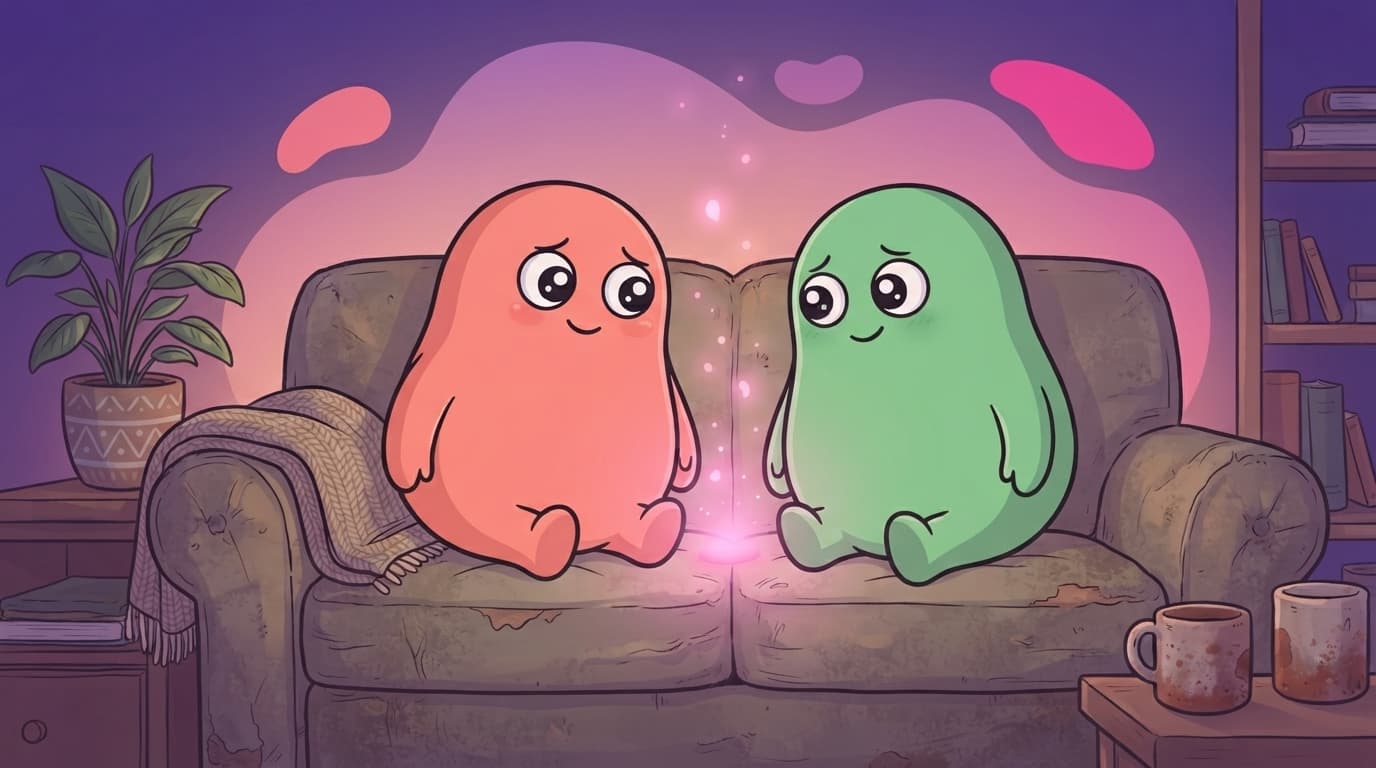
Most couples who have been together a while know the feeling. You love each other, you're close, you'd still pick them out of everyone, and somewhere along the way the wanting went quiet without either of you deciding it should.
Here's the short answer. Desire in a long-term relationship rarely disappears, it changes shape. Early on it arrives by itself, fuelled by newness. Years in, it tends to show up once the conditions are right: some time, a little space from the to-do list and a reason to see each other fresh. Emily Nagoski, a health educator and author, calls this responsive desire. So the way back is less about trying harder to want each other and more about clearing what's in the way and adding back what gets you going.
This guide pulls together everything we've written on desire in long relationships, from why it dips to what to do when you want different amounts.
Why did the wanting go quiet when nothing is wrong?
Usually because the context changed, not the two of you. The dip after the first year is close to universal, and a love that feels solid can sit right beside a spark that has gone quiet. If you want the whole mechanism in one read, start with why wanting each other takes effort now.
Is it normal for sex to slow down after year one?
Sex slowing down after year one is completely normal, not a red flag. Why the honeymoon dip happens and how to keep the spark without a serious conversation.
Honeymoon phase over after a year? Here's why
Honeymoon phase over after a year? That's not a red flag, it's the schedule. Here's what's really going on and a low-key way to keep the charge alive.
Why does wanting each other take effort now?
Wanting each other taking effort after year one is normal, not the magic dying. Why desire shifts from spontaneous to responsive, and why intention helps.
Comfortable but is it too late to want more?
Comfortable but wondering if it's too late to want more from your relationship? It isn't. Here's why coasting dulls desire, and the small way back in.
Rebuild attraction to a partner you love, no spark
You love them and feel no spark. Here's why desire and love drift apart over the years and how to find out if the attraction's still quietly there.
Emotionally close but no physical intimacy: why
You're best friends who barely touch anymore, and you can't pinpoint when that happened. Here's the real reason, and a low-key way to bring the spark back.
Why affection feels easy but sex feels impossible
affection feels easy but starting sex feels impossible because closeness and desire run on different fuel, and the move risks a no a hug never does.
Long-term gay relationship, low sex? You're normal
A long-term gay relationship with low sex isn't a red flag, it's a script nobody handed you. Here's why the spark cools and a low-key way to bring it back.
Comparing your relationship to couples online
Comparing your relationship to couples on social media is a rigged game: that hot couple on your feed is a highlight reel, not a baseline. Here's how to stop.
What if we want different amounts?
Nearly every couple does at some point, and it's a gap between you rather than a flaw in either of you. These pieces look at the guilt, the pressure and the old scripts that widen it, and at why aiming for good enough sex takes so much of the heat out.
A desire gap in a long marriage, and how to close it
A desire gap in a long marriage isn't a verdict on either of you. Here's how to close it by changing the conditions around wanting, not by pressuring anyone.
Feeling guilty for not wanting sex as much?
Feeling guilty for wanting sex less than your partner does? Here's why the guilt is what's dialling your desire down, and a lower-pressure way back in.
I'm the woman who wants sex more. Is that normal?
Wanting sex more than he does is common for women, not a flaw in either of you. Why the script gets it wrong, and how to want out loud without another no.
Good enough sex: why aiming lower actually helps
Good enough sex is flexible sex that's sometimes great and sometimes just nice. When desire doesn't match, dropping the perfect bar takes the pressure off.
Could it be hormones or medication?
Sometimes the brake is chemical. Perimenopause, the pill and antidepressants can all quietly turn the volume down, which is worth knowing because it moves the question off either of you. Each piece explains what's going on and what helps, alongside a chat with your GP.
Perimenopause low libido: what helps when desire dips
Perimenopause low libido: what helps when the wanting quietly disappears. Why your desire went responsive, not broken, and a low-pressure way back to it.
Does birth control lower libido? What to notice
Does birth control lower libido? Sometimes, quietly. Here's how to tell if your pill shifted your baseline, and what to do that doesn't start with a big talk.
Does my antidepressant lower my sex drive?
Does your antidepressant lower your sex drive, or is it you? Here's how SSRIs act as a brake on desire, what's really going on and a gentler way back in.
Don't feel sexy anymore? How to get it back
Don't feel sexy anymore and want it back? Here's how to feel like yourself again, grounded in how desire actually works, minus the pressure or performance.
How do we start wanting each other again?
Clearing the brakes is only half of it. Desire also needs something to push it along: curiosity, a little novelty and the sense that your partner is someone you haven't completely figured out. Keeping desire alive in a long-term relationship is the best single place to start.
How to keep desire alive in a long-term relationship
The wanting went quiet years ago and you've quietly become roommates. Here's how to keep desire alive in a long relationship by tending it, not waiting for it.
Is curiosity the secret to lasting attraction?
Curiosity keeps attraction alive because it makes a familiar partner feel new again. Here's how staying curious keeps you wanting each other for years.
How to rediscover a partner you know inside out
You know everything about your partner and somehow lost the spark. Here's how to rediscover each other without another heavy talk, one private swipe at a time.
More attracted to your partner in their element?
Watching your partner do what they're great at can make you want them all over again. Here's why a little distance feeds desire and how to catch it more often.
What couples with great sex lives have in common
The habits couples with great sex lives actually share, and why it has almost nothing to do with frequency, technique or being naturally spontaneous.
Are we sexually compatible, or do we grow into it?
Wondering if you're sexually compatible? For most couples it's built, not found. Here's how couples grow their overlap by exploring together, early or years in.
Desire at a glance
| If this sounds like you | What's usually going on | Start with |
|---|---|---|
| "We love each other, but the spark has gone" | Desire has shifted from spontaneous to responsive | Rebuild attraction to a partner you love |
| "We're comfortable, maybe too comfortable" | Closeness without any newness | Is it too late to want more? |
| "One of us always wants it more" | A desire gap, widened by pressure and guilt | Closing a desire gap |
| "It changed around the time of a new medication" | A chemical brake, not a relationship problem | Antidepressants and sex drive |
| "Sex is fine, it's just the same every time" | Not enough novelty | Keep sex from becoming the same routine |
Key takeaways
- A dip in desire after the first year or two is normal and says very little about how much you love each other.
- Long-term desire is mostly responsive: it turns up once you're already close, rather than out of nowhere.
- Desire has brakes (stress, pressure, hormones, medication) and accelerators (novelty, curiosity, play). You need to work on both.
- When you want different amounts, lowering the stakes helps far more than trying to close the gap by willpower.
Where does peek fit?
peek is a private app for couples to explore intimacy together. It's not a dating app and it's not therapy. You each swipe on ideas on your own phone, and anything you both say yes or maybe to shows up as a match. A pass stays private, so you get the newness desire runs on without either of you having to go first or risk a no.
Frequently asked questions
Is it normal to lose desire in a long-term relationship?
Yes. Most couples notice the wanting settle after the first year or two, once the newness wears off and life fills up. It's a change in how desire works for you, from showing up on its own to showing up once you're already close, not a sign that something has gone wrong.
Does losing desire mean we've fallen out of love?
No. Love and desire run on different fuel. Closeness and security feed love, while desire leans on a bit of novelty, play and seeing your partner fresh. Plenty of couples feel deeply in love and barely want each other, and both can be true at once.
Can desire come back after years together?
It can, and it usually comes back gradually rather than all at once. Ease the pressure, deal with any practical brakes such as tiredness or medication, then bring back small doses of curiosity and newness. Wanting tends to follow once there's room for it.
Download peek
Take the next step together, in private first.
Nothing is shared with your partner until you both choose it.


