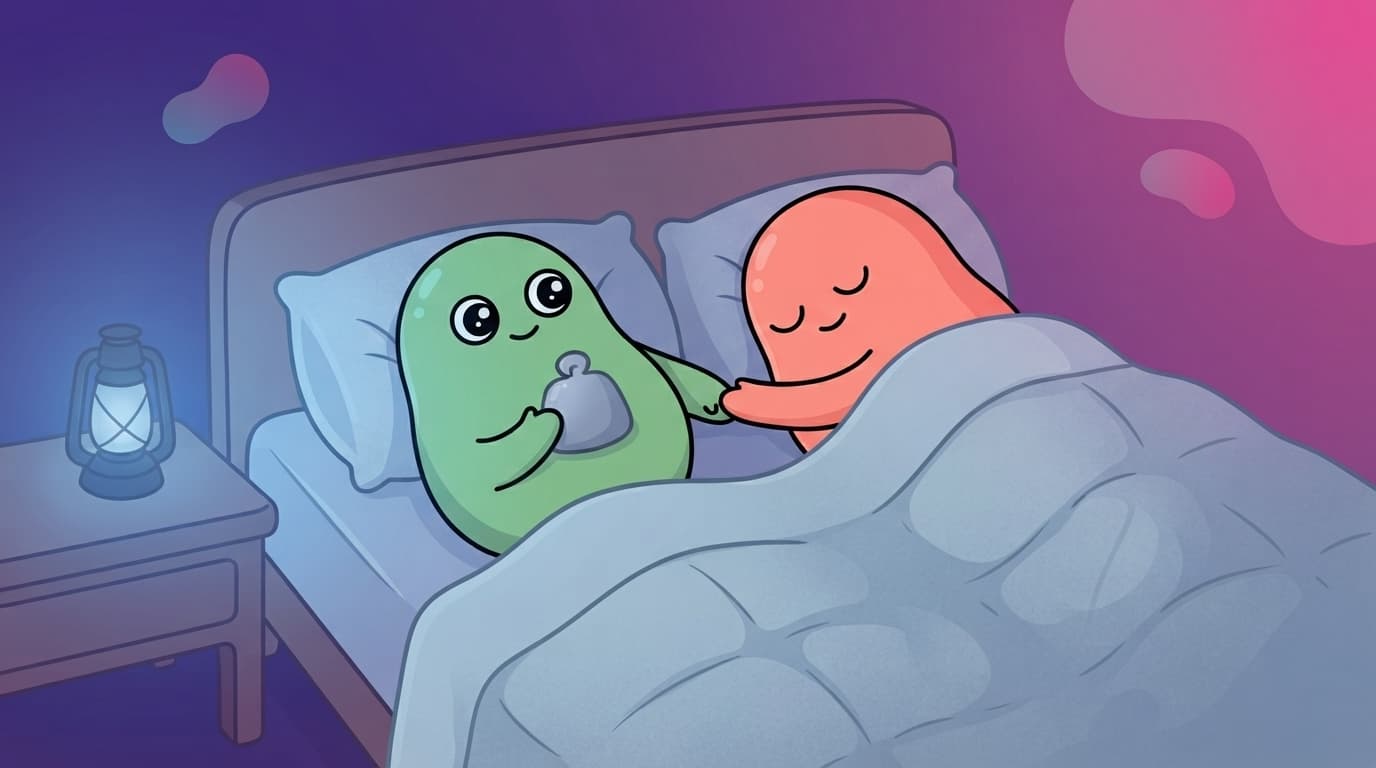
You've googled this at midnight, screen brightness turned all the way down so you don't wake anyone. You've told yourself it's just stress, just a long week, just a body that's tired in a way sleep barely touches. And you still feel it every time they reach for you and you're not in the mood: a quiet, sinking little voice telling you something's wrong with you for not wanting it as much as they do.
Here's the part nobody's told you yet: that voice isn't reporting a real problem, it is the problem. Wanting doesn't run on obligation, it runs on feeling safe and unpressured, and guilt is the opposite of both. The moment sex turns into something you owe instead of something you might enjoy, your brain files it under demand and desire backs out of the room. Forcing yourself to want it more isn't the answer. Put the weight down and wanting has somewhere to land again.
You love them. That's never been in question. Somewhere along the way though, the gap in how much each of you wants it stopped being a plain fact and started feeling like a verdict on you, so now there's a low hum of guilt every time you're the one who isn't in the mood. You haven't done anything wrong, and you're not some worse version of the couple on everyone else's highlight reel. You've just been carrying something that was never going to make you want them more.
Why do I feel guilty for not wanting sex as much as my partner?
Because you can feel their disappointment and you've made it yours to carry. When two people want sex at different rates, the guilt almost always lands on whoever's turn it is to say not tonight, as if the gap were a character flaw instead of just a difference. It isn't. A desire gap is one of the most common things couples quietly live with, and feeling this way about yours says nothing about how much you love your person.
Here's the mechanism underneath it. Wanting runs on two systems: accelerators that turn it on and brakes that shut it down. Guilt is one of the heaviest brakes there is: pressure, obligation and feeling watched, all pressed down at once. The guiltier you feel about not wanting it, the harder your brakes get pressed and the less desire shows up, which makes you feel guiltier still. The guilt was never reporting on how much you want them. It's been manufacturing the shortfall.
Which means the usual advice, just try to want it more, has it backwards. You can't force an accelerator by leaning harder on the brake. One thing worth ruling out: if the dip started with a new medication, some antidepressants press that same brake.
Is it normal to have a lower sex drive than your partner?
Yes, more normal than anyone admits out loud at 9pm on the couch. Two people almost never want sex at the same rate forever. Barry McCarthy, a sex therapist known for the good-enough-sex model, makes the point that a difference in desire between two people is ordinary and near-universal, not a fault for anyone to feel guilty about. Couples do best when they drop the perfect-performance bar and treat differing desire as something normal to navigate together, not a shortfall in one of you to correct. What actually wears a couple down isn't the difference itself, it's what the difference turns into: one person feeling rejected, the other feeling like a walking disappointment and both of you quietly keeping score.
There's a second thing worth knowing, because it takes more weight off. A lot of people wait for desire to hit them out of nowhere, then panic when it doesn't show up on cue. But wanting is often responsive: for many long-term partners it shows up in reply to an unpressured moment, closeness, play, a little warmth with nothing owed, rather than striking first. Not spontaneously wanting it isn't the same as not wanting it. It usually means your desire is waiting for an invitation that doesn't feel like a demand.
How do I stop feeling guilty and get some desire back?
You take the obligation out of the moment, so intimacy stops feeling like a test you keep failing. The goal is to notice what you're actually curious about, on your own terms, with nobody waiting on your answer. Here's what shifts once the pressure comes off:
- Guilt needs an audience, so take the audience away. Answer privately instead of reacting to a live ask, and there's no disappointed face to manage.
- No scorecard, no quota. No frequency to hit, no "so are we doing this or not." Take the number off the table and desire gets the room guilt used to take up.
- A small yes is proof, not pressure. Landing on something you're both curious about is evidence the spark isn't gone, just buried. Because you both chose it, it's nobody's campaign.
- Context beats willpower. You're not summoning desire by force, you're giving it the conditions it needs. That's a setup, not a chore.
This is also why the reach-and-get-turned-down dance hurts, and it cuts both ways. Your partner isn't trying to pressure you, they're just reaching and hoping, but the reach lands on you as a demand and your not tonight lands on them as rejection, and round it goes. If that sounds familiar, our guide on how to initiate sex without the guesswork unpacks the other side of it, and if the gap has quietly hardened over years rather than one season, closing a desire gap you've lived with for years is written for exactly that.
The honest version: you get desire back by making intimacy safe enough that your body stops bracing for a demand, not by feeling worse about not having it.
Key takeaways
- Feeling guilty for not wanting sex as much as your partner is extremely common and says nothing about how much you love them.
- Guilt is pressure, obligation and feeling watched all at once, the exact brakes that shut desire down.
- Trying to force yourself to want more doesn't work. You can't press the accelerator by leaning on the brake.
- Responsive desire means wanting often shows up in reply to a low-pressure moment, not out of nowhere, so an unpressured setting matters more than willpower.
- The way back is taking the obligation off intimacy so you can notice what you want on your own terms, no scorecard and nobody waiting.
None of this is a willpower problem, and you've probably already tried the willpower version: scheduling it, pushing through, waiting to feel in the mood. It didn't work because guilt was never yours to muscle past, it needed the pressure gone, not more effort. peek takes the ask out of it entirely: the idea to swipe comes from the app, not either of you, so there's nothing personal to reject and nothing shared until you both choose it. Download peek on the App Store or Google Play and let wanting show up without an audience.
Frequently asked questions
Is a lower sex drive than my partner a problem I need to "fix"?
Not a problem, a difference. Almost no two people want sex at the same rate forever, and a desire gap is one of the most common things couples navigate. What's actually worth changing isn't your number, it's the guilt and pressure that build up around the gap.
Why do I feel guilty even when my partner isn't pressuring me?
Because you can sense their disappointment and you've made it yours to carry. Pressure doesn't have to be spoken to press your brakes. Just knowing they want more is enough to turn intimacy into an obligation in your head, which is exactly what dampens wanting.
Can desire actually come back, or is this just who I am now?
It can absolutely come back, and usually not by force. For a lot of long-term partners, desire is responsive: it shows up in reply to a relaxed, unpressured moment rather than striking out of nowhere. Take away the guilt and the demand, give desire a low-stakes way in, and it usually comes back on its own.