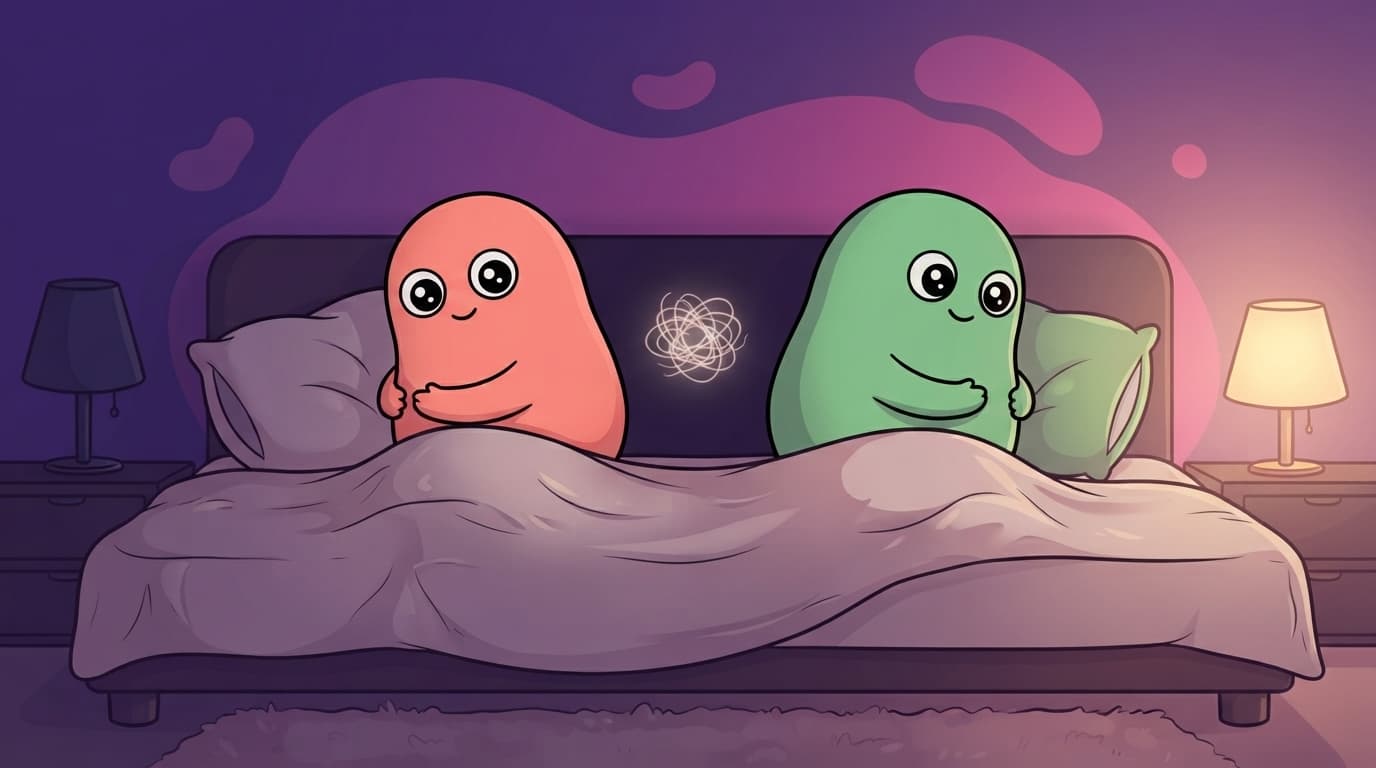
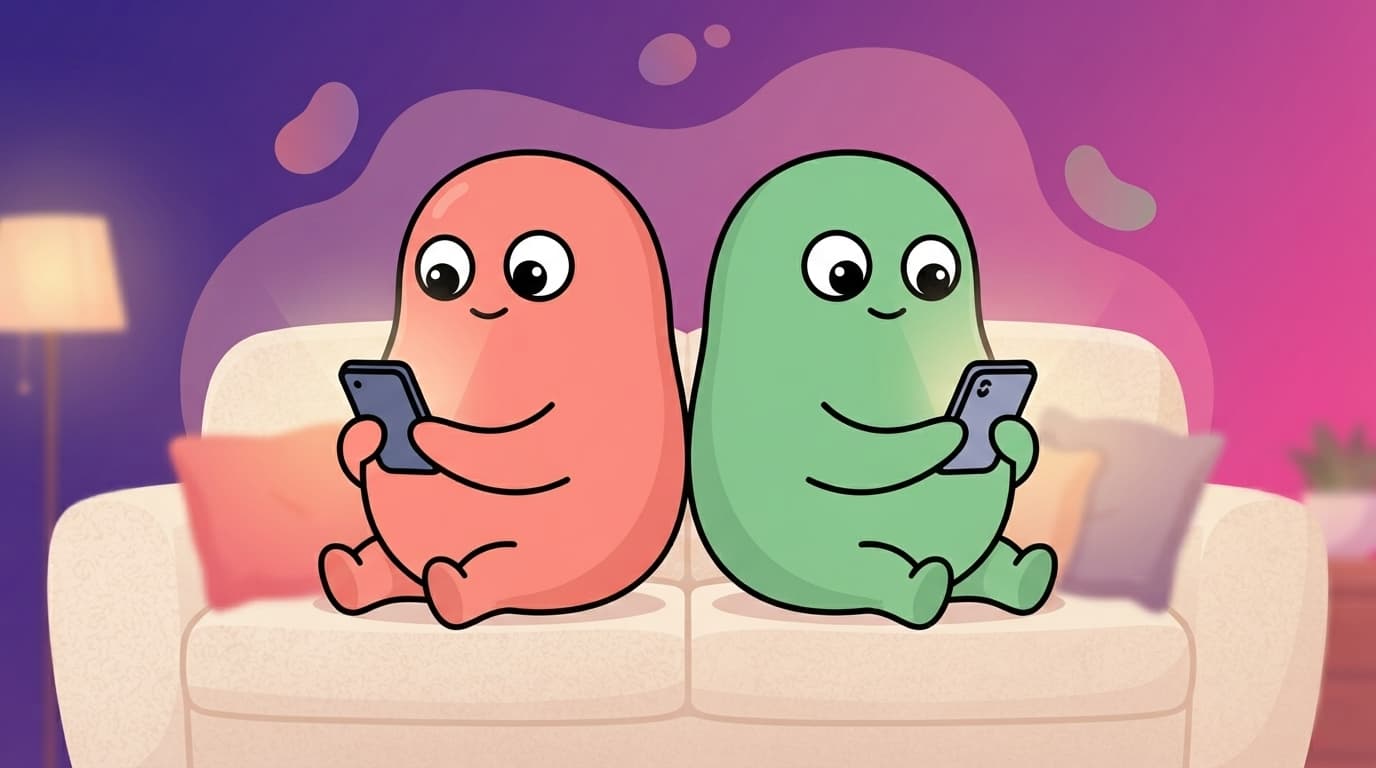
You two are still affectionate. Hands find each other on the couch, there's a kiss goodnight, your head lands on their shoulder halfway through the show and none of it is a problem. And yet the last time it went further is measured in months, and reaching for more than the hug feels like it weighs a ton. If you've drifted even further, into best friends who barely touch, being emotionally close without physical intimacy has its own quiet reasons.
Here's the short version: affection and desire don't run on the same fuel. The comfort and familiarity that make a hug easy aren't what switches desire on, and starting sex carries a real risk of a no that a goodnight kiss never does. So affection flowing while sex stalls isn't proof you've stopped loving each other. It's a known paradox, and the way out doesn't ask either of you to be the brave one.
Why does a hug feel easy but starting sex feel like too much?
Two things are happening at once, and neither is about how much you love each other.
The first is fuel. Esther Perel, a psychotherapist, has spent her career on this exact paradox: the closeness that makes affection easy, the comfort of knowing someone all the way down, isn't the same thing that lights desire. Desire also wants a bit of space, a bit of novelty, the chance to see your partner across the room like you don't already know every inch of them. Affection grows on closeness. Desire needs a little air. That's why you can be deeply close and still not reaching, and nothing's gone wrong. It's the same bind as rediscovering a partner you already know inside out: you ran out of things to find out, not things to love.
The second is risk. A hug is deniable in the best way: rest your head on a shoulder and nothing got refused, because nothing got asked. Starting sex is a clear question with a yes or no clipped to the end, and once a "not tonight" has landed as a rejection of you rather than the moment, your body reaches for the safe one. Reach less, hurt less. It's not cowardice. It's arithmetic. And if even a hug has started to carry a question, that's when affection starts to feel like pressure, a slightly different knot.
Here's the split, plainly:
| A hug or a goodnight kiss | Starting sex |
|---|
| What it runs on | Comfort and closeness | A spark that also needs space |
| What it asks | Nothing specific | A clear yes or no |
| Rejection risk | Almost none | Real, and it feels personal |
| What your body learns | Reach, it's safe | Hesitate, then freeze |
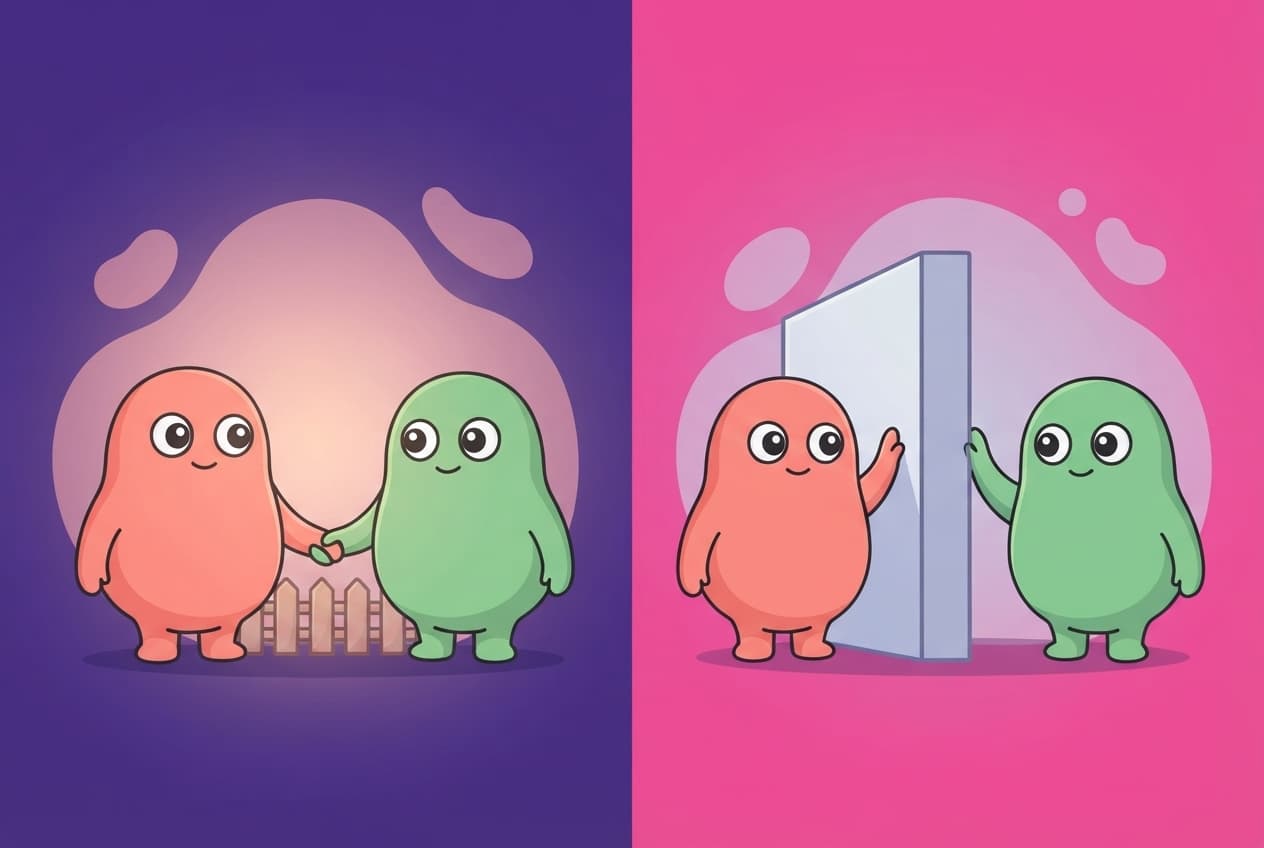
The problem was never the love. It's that one reach has a trapdoor under it and the other doesn't, which is also why initiating starts to feel like begging after enough soft declines.
Is it normal to be scared to make the first move?
Yes, and it's far more common than anyone admits at 9pm on the couch. You're guarding against a hurt that has actually happened to you. That's memory, not paranoia.
And it becomes a loop, the same one behind why chasing harder makes a partner pull away. One of you reaches, it doesn't land, so reaching starts to feel like risking a small rejection and you do it less. Meanwhile an unspoken want in the air can land on the other side as pressure, the least sexy thing there is, so they pull back too. Everybody backs into the safe closeness. Nobody's the villain here.
You can't talk your way out of it either. The couples most stuck here have had the same painful conversation a dozen times, and it mostly makes it heavier. The way back tends to look the same: small low-stakes moments, not one more big serious talk. Couples closing a desire gap that's hardened over years and couples trying to reopen intimacy without a big conversation land in the same place.
But clearing the fear is only half the job. Take the risk away and you've released a brake, not the spark. The other half is the good stuff Perel points at: novelty, play, the jolt of feeling wanted again.
How do you start sex without the fear of rejection?
You take the going-first out of it, and you make the reach a bit playful again.
Start with the part that matters most if you're skeptical: the idea comes from peek, not from either of you. When a prompt shows up on a card, there's nothing personal in it to turn down. Saying no to a card costs nothing. Saying no to your partner's face costs everything, which is what made the old dynamic so heavy. On neutral ground, the answer stops being a verdict on the two of you.
Here's how that plays out:
- Nobody reaches first. You each swipe on your own phone, in private, so no one's left exposed while the other holds the yes or no. No reacher, nothing to reject.
- It puts the air back. The cards nudge at things you might never have said out loud, a bit of novelty and mischief, the exact stuff desire runs on. Nothing gets shared until you've both said yes or maybe to the same card, and then it becomes a match you explore together.
- A match is proof you're wanted. The first time a card you said yes to comes back matched, it's quiet evidence the spark isn't gone, just buried, and that someone still said yes to you.
If you've done the therapy, the scheduled nights, the books you both underlined, thinking "we've tried everything, why would a swiping app be different" is completely fair. But almost everything you tried still made one of you go first, exposed while the other decided, and that's the part that kept caving in. Not your love. Not your effort. peek isn't one more thing to "fix". It pulls out the going-first and hands back a bit of play.
That also changes how you hand it over, which for you two is the whole ballgame. No pitch, no referendum on your sex life. Something small and true does it: "found this thing you swipe through on your own. nothing shows up unless we both like the same card. no pressure." An open door, walk through it in your own time or don't, with no trapdoor underneath and a little spark on top.
Key takeaways
- Affection and desire run on different fuel: closeness makes a hug easy, but desire also wants space and novelty, so the gap is a known paradox, not a sign you're doing it wrong.
- Starting sex carries a real rejection risk a hug doesn't, and once a "not tonight" has stung, your body learns to reach for the safe closeness and freeze at the rest.
- Clearing the fear only releases a brake, so the other job is adding the spark back: play, novelty, feeling wanted.
- peek puts the question on neutral ground: the idea comes from a card, not either of you, and you both swipe privately so only a shared yes or maybe becomes a match.
- A first match is low-stakes proof the spark's still there, not one more thing to perform.
If you've both settled for the safe closeness and miss the rest, peek hands you a way back that asks neither of you to be the brave one. Download it on the App Store or Google Play and swipe through a few cards whenever the mood takes you.
Frequently asked questions
Why can I hug my partner but not start sex?
Because the two run on different fuel and carry different risk. A hug lives on comfort and asks for nothing, so it feels safe. Desire also needs space and novelty, and starting sex is a clear yes-or-no question. If a past no has landed on you rather than on the moment, your body learns to reach for the easy closeness and freeze at the risky one.
Does being scared to make a move mean my desire is gone?
No. The fear is about the risk of reaching, not the wanting drying up. A move means risking a no, and that risk slams the brakes on before desire gets a look in. Take the rejection risk away and add a bit of novelty back, and the wanting is usually still right there.
How does peek help if we're both scared to start?
It takes out the going-first. You each swipe through cards privately on your own phone. Your partner never sees your swipes unless you match, and only the cards you've both said yes or maybe to turn into a match. peek isn't therapy, but plenty of couples use it alongside a counsellor to reach for each other between the harder talks.