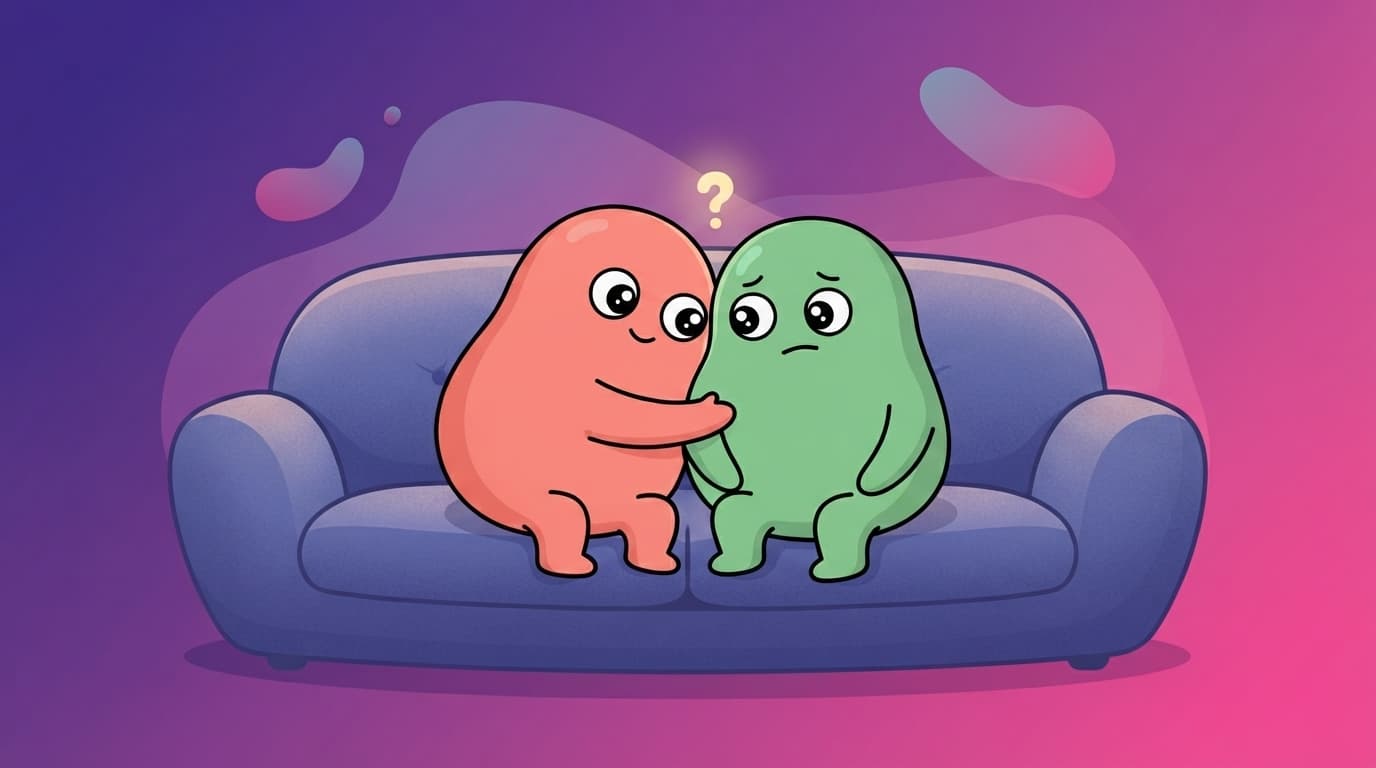
You've caught yourself keeping a hug a beat shorter than you wanted to, just so it wouldn't get read as an opening move. Or you've felt your partner go a little stiff mid-cuddle and quietly filed it as a no. Somewhere in there the soft stuff, a hand on the back, a kiss goodnight, a lean-in on the couch, stopped being simple. Every bit of it seems to come with a silent "so, is this going somewhere," and that little question is exhausting on both sides.
Here's the short version: affection feels like pressure for sex when touch becomes the only channel left for wanting, so every cuddle has to carry a question it was never built to hold. The way through isn't more willpower or one more talk. It's giving touch its own low-stakes lane again, and moving the "are we doing more tonight" somewhere private, where nobody has to field it mid-hug. You're not cold, and your partner isn't just angling for something. The warmest thing you do together just got quietly overloaded.
Why does non-sexual touch feel loaded now?
Because it stopped being allowed to be nothing. In a good stretch, a cuddle is just a cuddle sometimes and the opening bars of something else other times, and nobody's keeping count. But when sex has gone quiet for a while, touch gets overworked. It becomes the one place wanting still gets expressed, so every bit of it starts carrying too much. One of you reaches, quietly hoping this is the time it goes somewhere. The other feels that hope land in the hug and stiffens, because a cuddle you can't fully meet starts to feel like a small failure. Same touch, two very different weights, neither of them put there on purpose.
Relationship researchers at the Gottman Institute spent years watching couples and found that the small gestures, a hand on the back, a squeeze in the kitchen, a lean-in on the sofa, are really bids: little turns toward each other that just say I'm here, no agenda. Those tiny bids are a lot of what keeps a couple warm, and they only work while they're safe to give and safe to receive. Once every cuddle has an ask riding on it, it stops reading as a turn toward and starts reading as the first move in something bigger. Pressure and obligation are about the least sexy things there are, and the stuff that actually rekindles wanting, feeling chosen, a bit of play, the surprise of being wanted, can't get a look in while touch does all the heavy lifting.
Is it normal for a hug to come with an unspoken question?
Wildly normal, and almost nobody says it out loud at 9pm on the couch. Here's the loop most couples don't clock:
- Touch becomes the only signal. With sex quiet, every hug, hand-hold and kiss has to do the job of saying "I still want you."
- The reach carries a hope. When one of you leans in, you're not just cuddling, you're hoping, and that hope is legible even when nobody says a word.
- The other braces. A cuddle you can't fully meet starts to feel like something you're getting wrong, so you tense up or keep it short.
- The brace reads as rejection. Whoever reached feels the stiffening, files it as "not wanted" and reaches a little less next time.
- Affection itself goes quiet. You both touch less to dodge the whole loaded exchange, the opposite of what either of you wants.
Naming it is half the relief. From the inside it feels like a you problem or a them problem, when it's really a structure problem. The touch didn't change. It just got asked to carry a conversation you're not having anywhere else.
How do we take the pressure off cuddling without giving up on sex?
You give the two things separate lanes. Touch gets to be touch again once you stop making it double as the ask. And the "here's what I'm curious about tonight" moves somewhere neither of you has to field it live. Here's what shifts:
- The ask stops coming from either of you. When the idea comes from a card, not from your partner and not from you, there's nothing personal to turn down. A partner carries rejection weight; a prompt barely does.
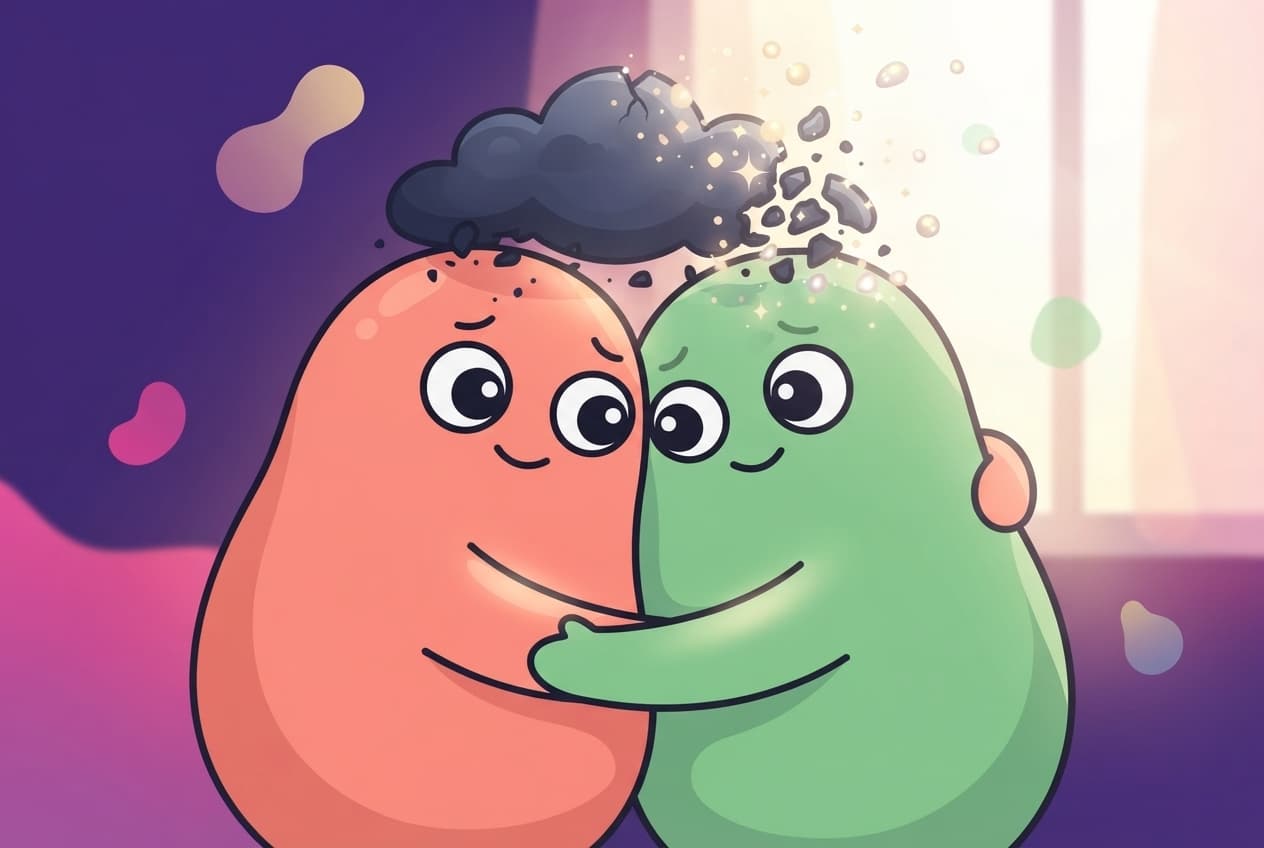
- A hug can just be a hug. When wanting has its own private channel, affection stops being the audition for it, and you can hold each other without scanning for meaning.
- Nobody fields the question live. You each say what you're up for separately and privately, then only surface where you already overlap. No yes-or-no to brace for, and you answer for yourself, not in reaction to a reach.
- There's no scorecard. No quota riding on a cuddle, no "so is this going somewhere," no verdict at the end of a hug.
- A match is proof, not pressure. When you both land on the same thing, privately, that's evidence the spark isn't gone, just buried. And because you both chose it, it never reads as one person's campaign.
The repair inside all of it: you let affection be affection again, no destination attached. A cuddle gets to arrive nowhere and still count.
If you've been at this a while, you've probably tried the version where you talk it all through, and the version where you booked a Saturday for it, and both quietly turned into homework. Those ask someone to go first, then wait to see how it lands. This is different: nobody goes first, nobody gets turned down and the only thing that ever surfaces is something you both already wanted. It's the same idea behind taking the sting out of who initiates, aimed at the touch before the ask. And if your version of this is a recent post-baby pause more than a long pattern, finding your way back to each other after kids covers the gentler on-ramp.
Key takeaways
- Affection feels like pressure when touch becomes the only channel for wanting, so every cuddle carries a question it was never built to hold.
- A cuddle is meant to be a bid, a low-stakes turn toward each other (Gottman), and it only works while it's safe to give and receive.
- The bracing isn't rejection and the reach isn't nagging. It's a structure problem, and the loop feeds itself until you split the two.
- Give touch its own no-strings lane and move the actual question somewhere private, where nobody has to answer it live.
- A private mutual match is rejection-proof and symmetrical, so wanting reads as shared discovery, not one partner's pressure.
Want a version of this where a cuddle can just be a cuddle again? That's the idea behind peek: you each swipe in private, and nothing surfaces until you both land on the same thing. Download peek on the App Store or Google Play, and let the hug just be a hug again.
Frequently asked questions
Why does my partner tense up when I hug them?
Often because the hug has quietly started carrying an expectation neither of you put there on purpose. When touch is the only place wanting gets expressed, a cuddle can feel like the opening of a negotiation, and bracing is the reflex. It's rarely about not wanting you. Give affection a no-strings lane and the reflex softens fast.
How do I show affection without my partner thinking I want sex?
Take the question off the touch itself. If "do you want more tonight" lives somewhere private you both answer separately, your hug doesn't have to double as the ask, so it stops reading as one. The touch gets to mean only what it means, which is what makes it safe again.
Is it a problem that non-sexual touch has become loaded between us?
It's incredibly common and it's not a verdict on your relationship. It's a sign that sex has gone quiet enough that touch got overloaded doing two jobs at once. Give wanting its own private, no-stakes channel and affection goes back to being just affection.