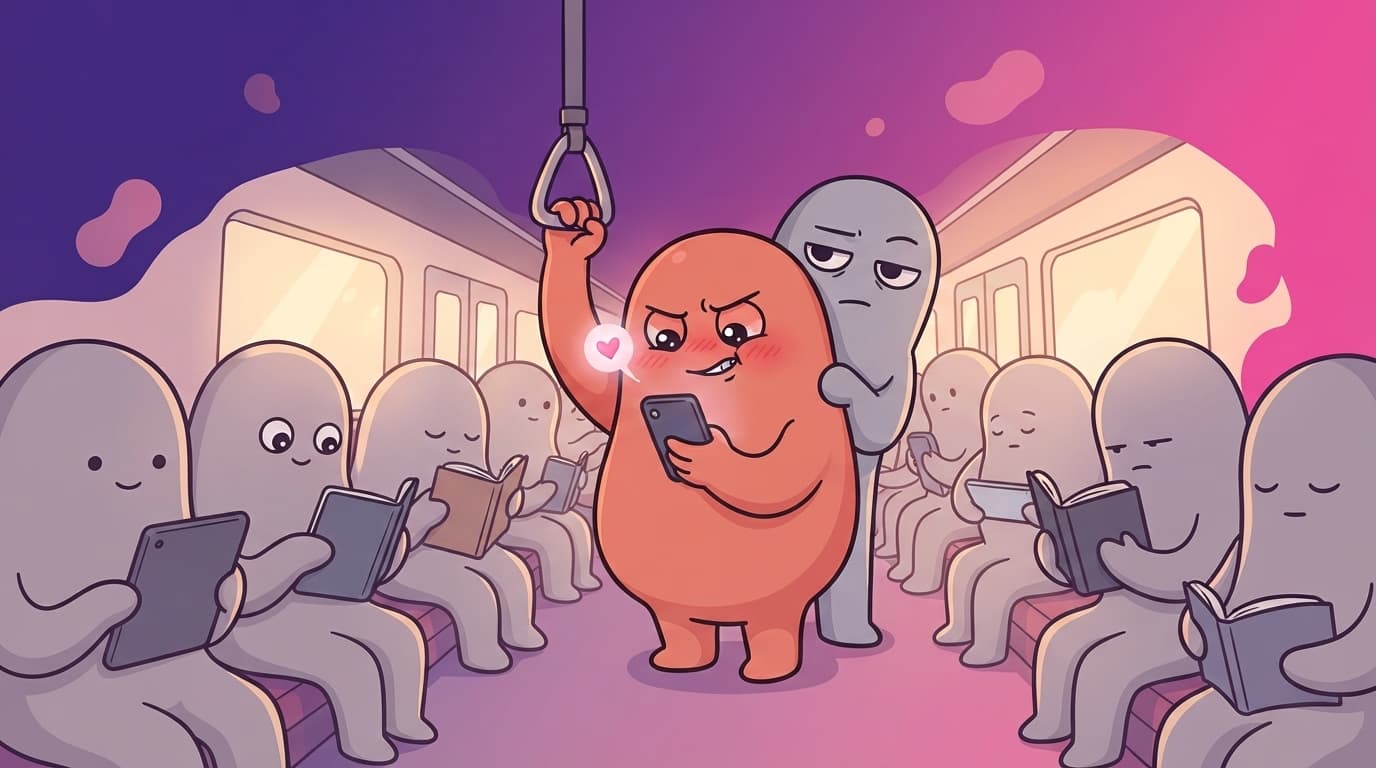
Here’s the thing nobody tells you at 9pm on the couch: love and desire don’t run on the same track. One can go quiet for years while the other stays completely intact. So no, the spark’s rarely gone.
Yes, you usually can rebuild attraction to a partner you love. The spark is almost never gone, it’s buried under pressure, the same old routine and the low-grade dread of reaching for someone and getting a "not tonight." You don’t get it back by trying harder. You get it back by taking the weight off and finding one small bit of proof that the wanting never left.
If you two have quietly started calling yourselves roommates, this one’s for you, and so is our guide on closing a desire gap in a long marriage. You love each other and run a whole life together, but the sex part went quiet years back and every attempt to talk about it lands in the same tender stalemate. So the real question isn’t "how do we try harder." It’s "why would anything be different this time." Let’s get into it.
Why do I love my partner but feel no spark?
Because love and desire aren’t the same wiring, and over enough years they quietly drift apart. You can be head-over-heels attached to someone and still feel the wanting go flat. That’s not a verdict, it’s one of the most common stories in long-together couples. Two ideas explain it:
- Desire is accelerator minus brake. Arousal is a tug-of-war between the things that turn you on (feeling wanted, a bit of novelty, closeness) and the things that turn you off (stress, resentment, the fear of being turned down). In a long drought the brakes quietly stack up. Every "not tonight" that stung, every circular 11pm argument, another brake. You’ve got your foot mashed on the brake without even clocking it.
- Closeness and desire want opposite things. Esther Perel, a psychotherapist who studies why couples who love each other stop wanting each other, makes the case that intimacy craves familiarity while desire needs a little distance and surprise. The very closeness that makes you excellent roommates is part of what flattened the charge. So the flatline isn’t proof the attraction died, it’s often proof you got so close there was no gap left for wanting to spark across. That is exactly the knot rediscovering a partner you already know inside out is built to loosen.
Is the spark actually gone, or just buried?
Almost always buried, and that gap matters more than anything else. Gone would mean the attraction doesn’t exist anymore. Buried means it’s right there and just can’t get through the pressure, a rough patch, the routine and the quiet standoff over who reaches first. The tell? The wanting still flickers in little flashes. Your partner across a room in a certain light. That one time they surprised you and you thought, oh, hello. That flicker is your evidence, and you’re not building desire out of thin air, you’re clearing a path for what’s already there.
Here’s the trap you’re probably stuck in:
| The old dynamic | Why it keeps the spark buried |
|---|
| Someone has to make the first move | Reaching first risks a no, so eventually nobody reaches |
| A "no" lands as a rejection of the whole person | The fear-of-rejection brake gets heavier every single time |
| Intimacy starts to feel like a quota | Obligation is a brake, not an accelerator, so desire slides further |
| Sitting down for another heavy talk reopens old hurt | The one tool you’ve got makes the next go even harder |
Every row is a brake, and not one is about how much you love each other. They’re all about the structure around the wanting, and structure is changeable in a way feelings-on-command are not. It’s the same move couples make after a long busy stretch or a season apart: stop forcing the feeling, and change the conditions around it instead.
How do we rebuild attraction without another heavy talk?
By changing the mechanism, not by sitting down for the same fraught conversation one more time. Talking about desire puts you both on the spot, and being on the spot is a brake. So make honesty possible without anyone having to go first:
- Ditch "who goes first." The deadlock exists because reaching is risky, the same thing that makes initiating sex feel like begging. Take the risk away and neither of you has to ask.
- Make it private and at the same time. If you each answer honestly in the dark and only find out what you both said yes or maybe to, there’s nothing to reject and nothing to feel ambushed by.
- Hunt for evidence, not a breakthrough. You’re not sorting everything out in one night, you’re catching one honest, mutual yes that proves the attraction is still in the building.
- Sneak a little surprise back in. Perel’s point earns its keep here: a small reveal, something you didn’t know your partner was up for, is exactly the mystery a too-familiar relationship lost. Kept up, that habit is why curiosity holds attraction together over years.
peek is built around this exact move. You each swipe through prompts privately on your own phone, and a card only becomes a match you can explore together when you’ve both said yes or maybe. Nobody sees your answers unless you land on the same card, so the first mutual match becomes a small, slightly surprising bit of evidence that the wanting is still alive. peek isn’t therapy and it isn’t a cure-all, it’s a different way in when you’ve run out of road on talking.
Key takeaways
- Loving your partner and feeling no spark is a common long-term story, not a verdict. Love and desire run on separate tracks and one can go quiet while the other stays strong.
- The spark’s usually buried, not gone. In a long drought the brakes (pressure, resentment, fear of rejection) pile up while the desire itself stays intact.
- Esther Perel’s paradox explains the flatline: closeness wants familiarity while desire wants distance and surprise, so too much cosy sameness dulls the charge.
- Talking keeps failing because it puts you both on the spot. You don’t need a breakthrough, just one honest, mutual yes as proof the attraction’s still there.
peek takes the risk out of reaching first and lets you both answer honestly in private, so a first match can quietly show you the spark’s still there. Download peek on the App Store or Google Play and start small.
Frequently asked questions
We have not had sex in a long time. Can attraction really come back?
Often, yes. A long gap is usually a sign the brakes stacked up, not that the attraction packed its bags. Take the pressure off, remove the fear of reaching first and let a little safety and surprise back in, and the buried wanting tends to resurface. A drought is far more often structural than permanent.
My partner wants sex less often than I do. Will this just feel like more pressure to them?
That’s the real risk. Pressure is a brake, so anything that reads as a quota just drops desire further. peek is built the other way round: your partner answers privately and for themselves, and only ever sees the cards you’ve both said yes or maybe to. No request to respond to, no scorecard.
How do I bring this to my partner without it feeling like an ambush?
Keep it small, and hand them the choice. Something as light as "I found this thing couples do privately, no pressure, want to try it sometime" is plenty, and it’s honest. You’re just opening a door and leaving it up to them, which is the opposite of pressure.
We have tried therapy and talking. Why would an app be any different?
Because it changes the mechanism instead of asking you to talk better. Therapy and another heavy talk both put desire on the spot, and being on the spot is a brake. peek lets you both be honest without going first, and it surfaces a small, mutual bit of evidence rather than reopening old hurt. It’s not a stand-in for a therapist though.