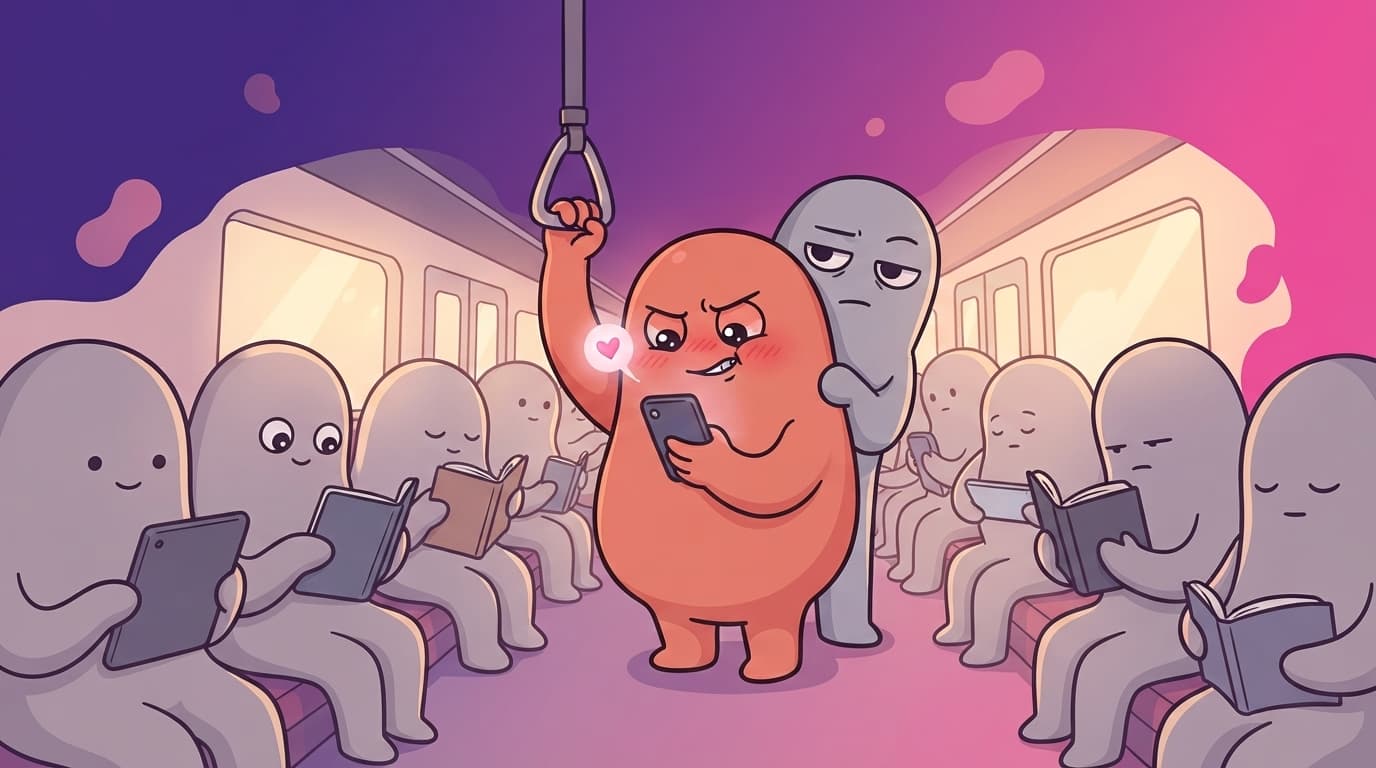
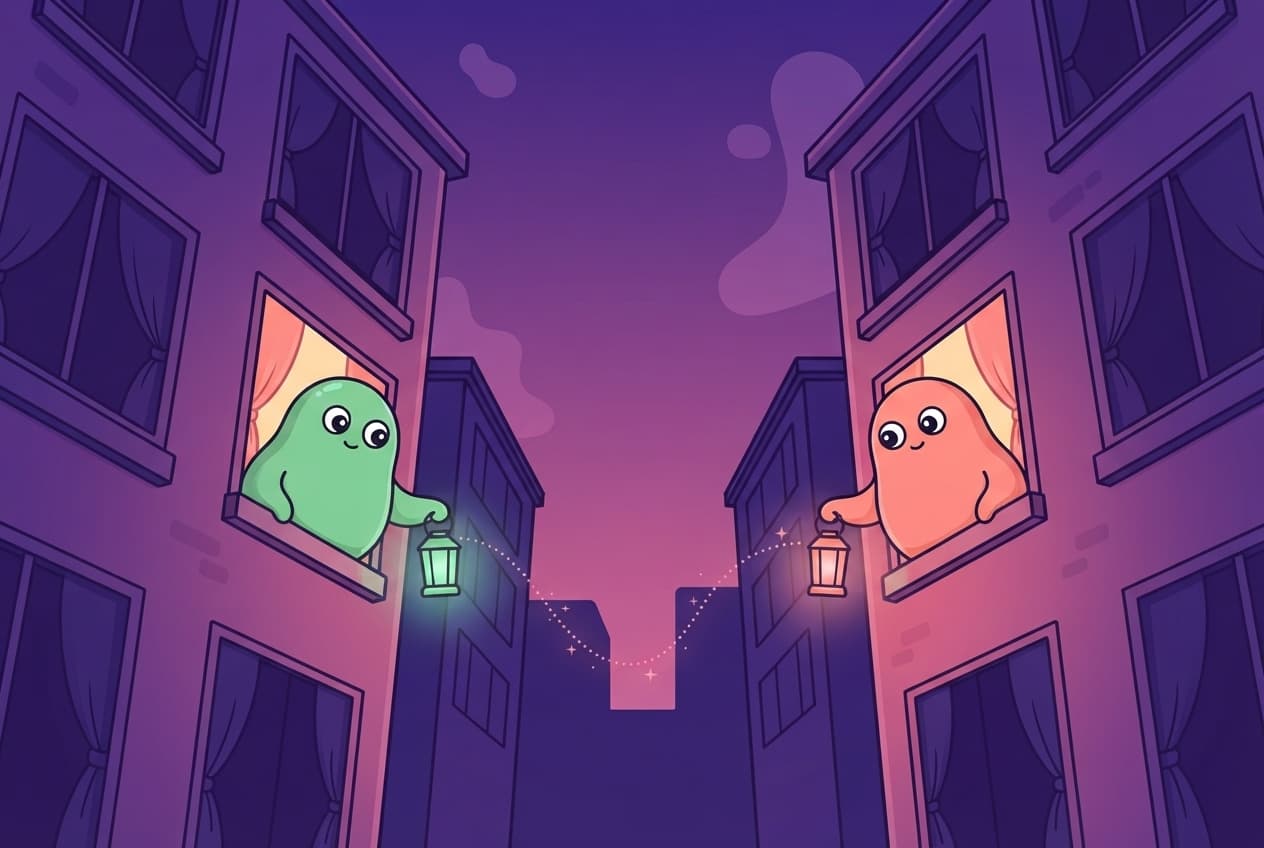
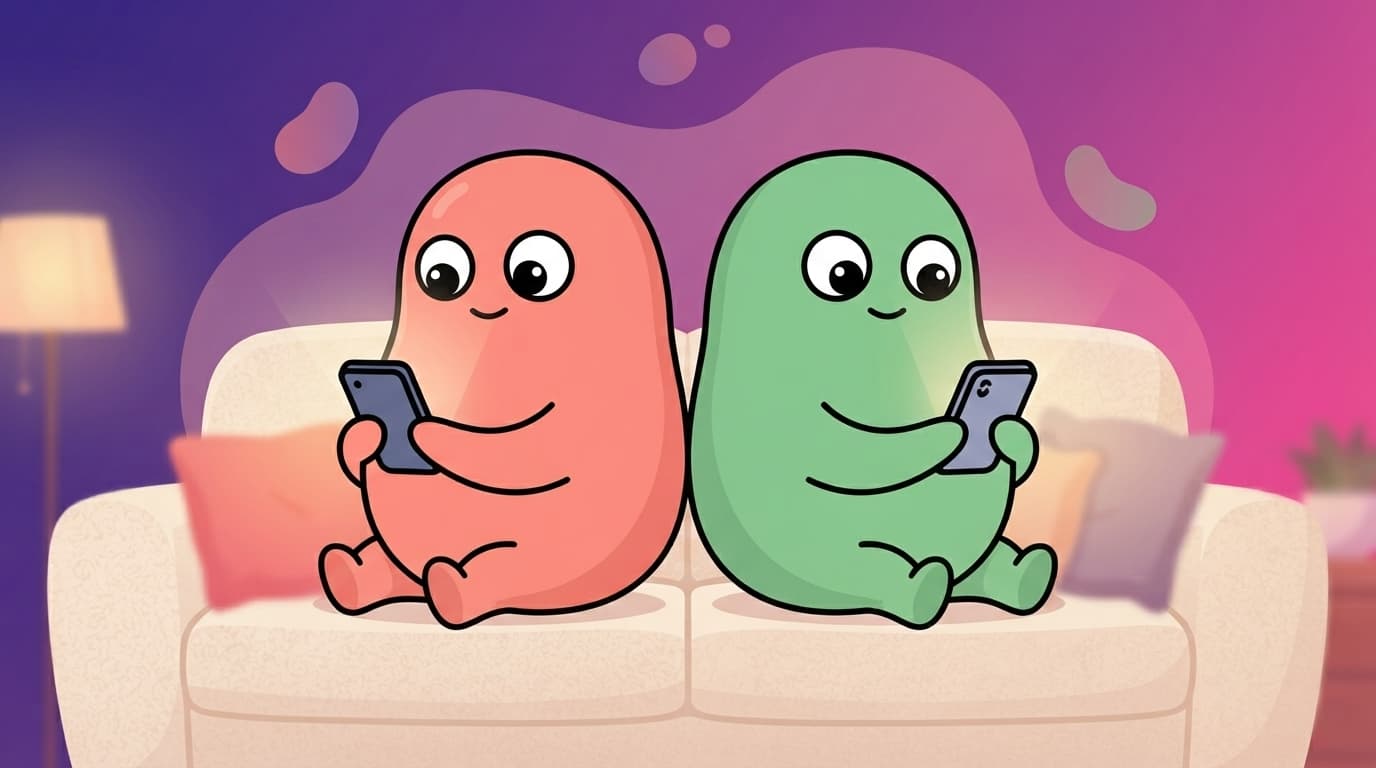
Years ago, one of you texted "bring home the good cheese" and the other one went pink in a meeting. Nobody else on earth knew why. These days the thread mostly says "can you grab bread", and if you’re honest, the two of you have been living more like roommates than flirts. Nothing blew up. It’s just years of work, tiredness and life stacked on top of each other, until the flirty texts quietly stopped and sending one out of the blue started to feel oddly exposed.
Flirty code words for couples are texts that look dull to anyone reading over your shoulder but mean something only the two of you get: "thinking about you", "tonight?", "yes please" or "not tonight". They work because they’re deniable. A code can be sent with nothing riding on it, answered with a wink or let go without anyone getting hurt, which makes it about the gentlest way to start flirting again after years together.
Why does a decoy text take the pressure off?
Because the decoy does the hiding for you. Anything flirty and direct, sent after a long quiet stretch, can feel enormous on a screen. "Bought the good cheese" can’t be turned down. It’s just a message about cheese, unless you both decide it isn’t.
The best part is that a "thinking about you" code asks for nothing. It isn’t an invitation or a booking. It’s a nudge with no strings, and it works from either side of the couch: whoever sends it is simply saying "you crossed my mind, and not in a bins way."
It’s also sneakily hot. Jack Morin, a psychotherapist and author of The Erotic Mind, spent years collecting people’s stories of their most exciting erotic moments, and longing, anticipation and a hint of the forbidden kept turning up. A text that means one thing to the room and another to the two of you is a tiny dose of all three. That’s why a code sent over a sandwich at your desk can quietly build anticipation without anyone having planned a thing.
So what flirty code words do we actually send?
Steal any of these, swap in your own references and notice which ones make you both smirk. They’re grouped by what they really mean.
"Thinking about you" (asks for nothing)
- "Bought the good cheese."
- "Walked past that bench today."
- "Our song came on in the chemist. Rude."
- A single 🐸, if the frog is your thing.
"Tonight?"
- "Skip the next episode tonight?"
- "Fancy dessert at home?"
- "Feeling a bit Lisbon."
- "Bed before the news?"
"Yes please"
- "Say no more."
- "Bringing the good cheese."
- "Leaving work on time for once."
- "Cancelled my plans with the dishwasher."
"Not tonight" (no rain date needed)
- "Not tonight, but I love that you asked."
- "Wrecked. Very flattered."
- "Sofa and tea for me. Keep sending these."
- "Lisbon’s closed tonight. Saturday, maybe?"
Only one of those last four mentions another day, and that’s on purpose. A no doesn’t need a rain date. "Not tonight" can be the whole message, and it’s still a warm one. The code only stays fun if either answer is a perfectly good one.
And if you’d rather drop the decoys and say exactly what you’re picturing, that’s sexting, a different and bolder thing. Our guide on how to sext your partner after years together picks up where these leave off.
Weren’t we better at this years ago?
Probably, but the game was rigged. You, years ago, texted on reflex. There were no school notes or mortgage reminders. The thread had nothing else to do but flirt.
Now it carries a whole life, and a flirty message has to squeeze in between the logistics. That’s not a sign the spark’s gone. It’s a crowded inbox. The upside is that you’ve got something your younger selves didn’t: years of in-jokes, near-misses and holidays that went sideways. Most of it has never been used for flirting. If you’re out of practice face to face too, here’s how to flirt with your long-term partner without it feeling forced.
How do we turn an in-joke into a code word?
Pick something that already makes you both laugh and give it a second job.
- Adopt an emoji. One frog, sent out of nowhere, means whatever you two decide. Pick one you’d never use by accident.
- Reply with a photo only. A picture of the good cheese on the shop shelf, no caption. They’ll know.
- Use the clock. A text at 9:09, or the time you first met, saying nothing but "now". Odd to anyone else, obvious to you.
- Keep it short enough to survive autocorrect. Two or three words beat a clever sentence that gets mangled into something about ducks.
Accept now that the first send might land a bit awkwardly. You’ll text "bought the good cheese" and get back "great, we’re out of crackers". Explain it. A slightly clunky "that was a code, by the way" is usually where the code becomes real. For the bigger picture of how couples build their secret code words for sex beyond the phone, the hub has plenty more.
What if we’ve run dry on in-jokes?
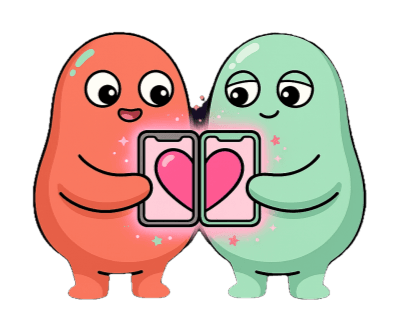
Then borrow one. That’s where peek is handy. The ideas on the cards come from peek, not from either of you, so there’s nothing personal to turn down. When a card turns into a match, the card said it first; you just give it a nickname. "Card night?" becomes a ready-made code nobody else will ever crack, and the date nights in there hand you plenty more material.
If you’re the one who found it, keep the hand-over as light as the texts: "I found this thing where we each swipe on our own phones. Want to try it?"
Key takeaways
- Flirty code words are dull-looking texts with a private second meaning: thinking about you, tonight?, yes please or not tonight.
- A "thinking about you" code asks for nothing, and either of you can send one.
- "Not tonight" can be the whole answer. A warm no doesn’t need a rain date.
- Years of in-jokes are raw material. Give one a second job and expect the first send to be a bit clunky.
Want something new to give a nickname to? Download peek on the App Store or Google Play. A match takes a yes or a maybe from both of you, and a pass is never shown to your partner.
Frequently asked questions
What’s a flirty code word to text your partner at work?
Something that would bore your colleagues stiff. A reference to a shared trip ("feeling a bit Lisbon"), a grocery item with a history ("bought the good cheese") or one emoji you’d never send by accident. If your boss read it, they’d assume you were sorting dinner.
Who should send the first code text?
Either of you. A "thinking about you" code doesn’t ask for anything back, so it works whoever sends it. Whoever gets it can just enjoy it.
What if someone else sees the text?
That’s the beauty of a decoy: a lock-screen preview of "bought the good cheese" fools everyone. Still, check which thread you’re in before you hit send. Your sibling does not need to hear about Lisbon.
How often can we send one before it wears off?
As often as it still makes you both smirk. Codes stay fun when they turn up now and then, not on a schedule, and you can always invent a new one when an old one starts to feel like a habit.