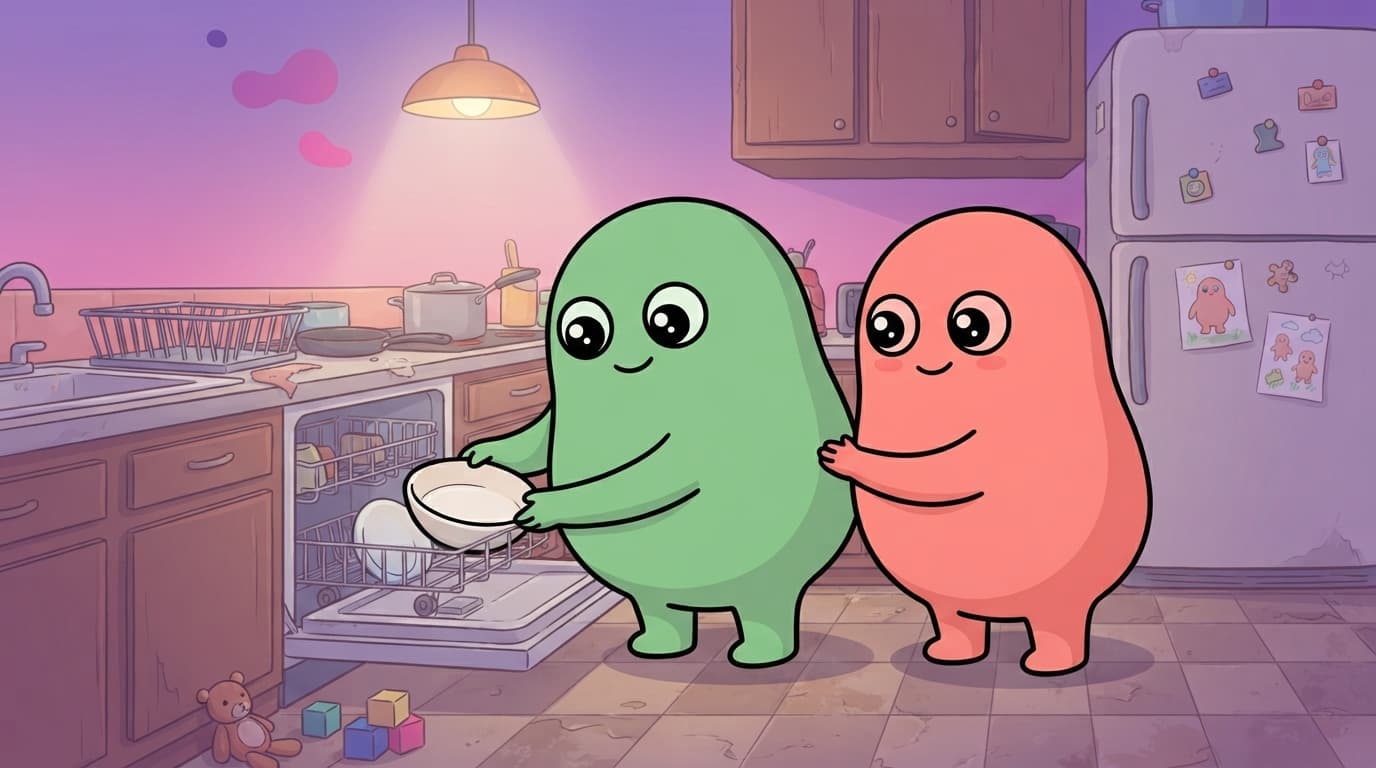
Somewhere in the last couple of years, "nice one, you got them out the door on time" quietly became the whole vocabulary of appreciation in your house. You still think your partner's brilliant. You just can't remember the last time you said so about them, and not about the school run.
The short version: go small, specific and frequent instead of saving it for one big gesture. Name the exact thing they did instead of a vague thanks, tell them what you still fancy about them and not only what they got done, and let them catch you noticing on an ordinary day. Little and often beats grand and rare almost every time.
Why does my partner still not feel appreciated when I clearly love them?
Because loving someone and saying so out loud are two different muscles, and the second one goes quiet first once life fills up. It's not effort missing or love fading. It's bandwidth. The logistics still get said out loud: who's doing bath time, did you book the thing, thanks for the milk. All useful. None of it tells your partner you still see them, specifically, as a whole person you're into and not just a very competent teammate.
Sue Johnson, the clinical psychologist behind emotionally focused therapy, spent her career on one plain question partners are quietly asking each other underneath everything else: are you there for me, do I actually matter to you. Appreciation is one of the clearest ways you answer yes. Not a card once a year. A specific "I see you" on an ordinary Tuesday, tied to something real.
So if your partner's gone quiet on feeling valued, it's very rarely the love that left. It's the same mental-load squeeze behind how busy parents make time for intimacy, not a chore, and the noticing is the part they're actually listening for.
What actually makes appreciation land?
Little, specific and often, every time. Here's what that looks like off the "one big gesture" track and inside ordinary life.
- Name the exact thing. "Thank you for handling the morning so I could sleep in, I really needed that" lands. "Thanks for everything" evaporates before it even arrives.
- Appreciate who they are, not just what they did. Tell them you love how they are with the kids, or that you still fancy the way they laugh, not only that they emptied the dishwasher.
- Actually look up. When they show you something stupid on their phone or start telling you about their day, put the thing down and look. Five seconds of full attention says more than a card ever could.
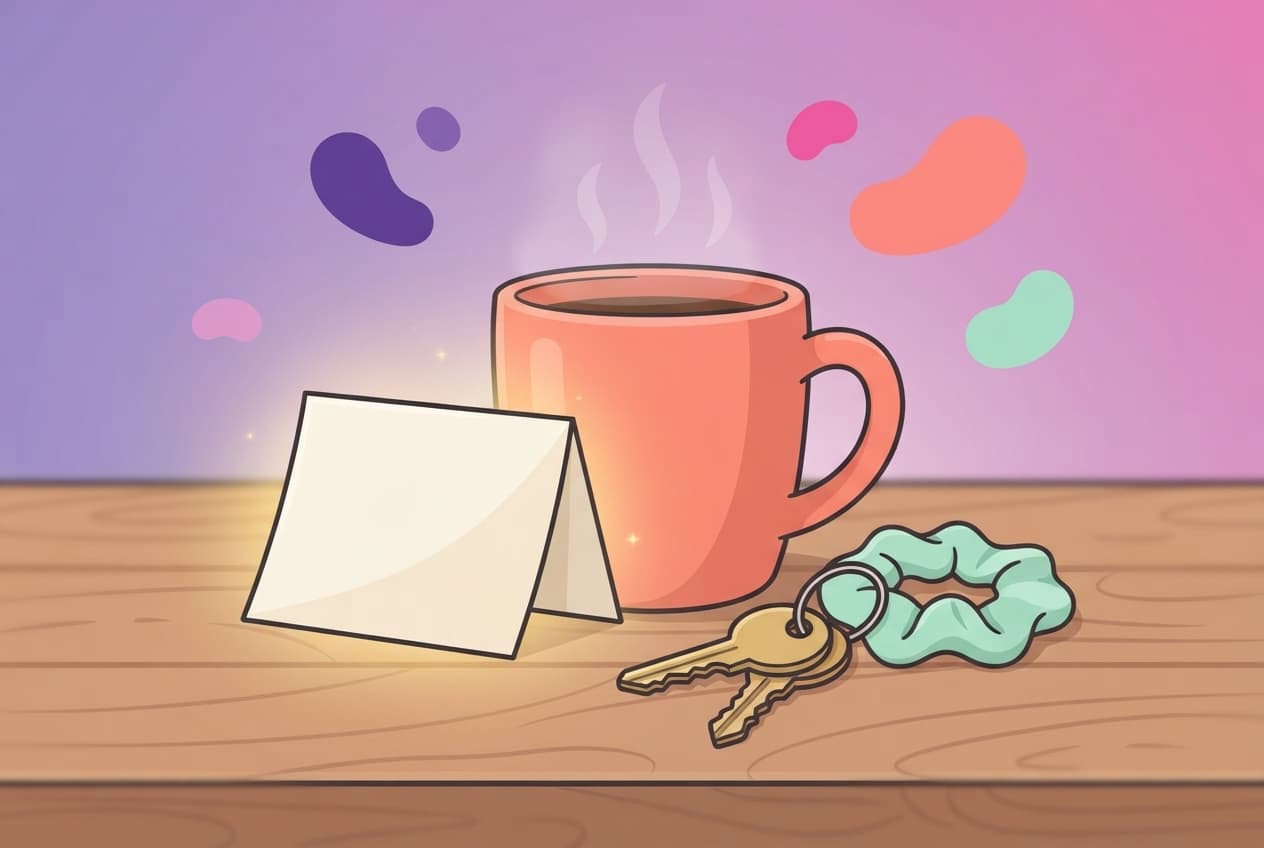
- Leave a small surprise. A note by the coffee, a text mid-afternoon that has nothing to do with logistics. Low effort, oddly high return.
- Say the flirty thing. "You looked really good today" is appreciation with a pulse. It tells them you notice them as a partner, not only a co-parent. If that register has gone quiet entirely, flirting with a long-term partner comes back faster than you'd expect.
That last one's worth leaning into, because a lot of appreciation between long-term partners quietly turns into gratitude for chores, and chores-gratitude isn't the same thing as feeling wanted.
How often should we actually be doing this?
Small and daily beats big and occasional, every time. One grand gesture a year is lovely and also easy to file away as a one-off. A steady drip of small ones changes the actual temperature of things, because your partner starts expecting to be noticed instead of bracing to be overlooked. It sits alongside the other daily habits that keep couples connected, all of them small enough to survive a bad week.
If the busy years quietly paused more than the appreciation, is it normal to feel out of practice with a partner is worth a read too. Appreciation is often the first small door back in.
Keep a little unpredictable in there as well, an out-of-nowhere "come here, I've missed you" alongside the reliable "thanks for the school run", so the good stuff never quietly turns into background noise.
How do we make the noticing go both ways?
This is the quiet frustration, isn't it. You don't want to be the household's designated appreciator, doing all the noticing while it only flows one direction. The answer isn't a lecture about effort, since that just adds another thing to the list. It's giving you both a low-stakes way to notice each other at the same time, so nobody has to go first and risk feeling a bit silly doing it.
That's the gap peek was built for. You each swipe privately through playful prompts about what you enjoy and want more of, and when you both land on the same one, it's a match. Nobody has to be the brave one who says it first, peek holds that awkward opening bit for you. "I wish they noticed me more" quietly turns into something you're both doing together, on an ordinary night. If the wider silence started before the appreciation did, finding your way back to each other after kids meets you right where that began.
Key takeaways
- Loving your partner and saying so out loud are different muscles, and the noticing goes quiet first once life fills up.
- Specific beats generic: name the exact thing, and appreciate who they are, not only what they got done.
- Small and daily beats big and occasional, because your partner starts expecting to be seen instead of bracing to be overlooked.
- Keep a little unpredictable in the mix so appreciation doesn't fade into background noise.
- Make it mutual, not one-sided, by turning noticing into something you both do at once instead of one person carrying it.
peek is a private, playful place to notice each other again without it turning into one more thing on the list. You each swipe through prompts on your own phone, and when you both say yes or maybe to the same one, it becomes a match you explore together. Download peek on the App Store or Google Play, and let tonight be the ordinary night you start.
Frequently asked questions
What if my partner isn't great at showing appreciation back?
Start by modelling the specific, low-pressure version and see what softens. Most people mirror warmth once it feels safe rather than demanded. If it stays genuinely one-sided, a shared prompt can help, since it invites you both to notice each other at once instead of one person being told to try harder. peek isn't therapy, so if there's real ongoing hurt underneath the quiet, a good couples therapist is the right call there.
Do grand gestures make a bigger difference than small ones?
Usually not. A big surprise is lovely, but it's easy to file away as a one-off, while a steady stream of small, specific noticing changes the everyday temperature of things. Let the occasional grand gesture be the cherry, not the whole cake.
How do I show appreciation when I'm exhausted and stretched thin?
Go tiny and specific. A ten-second "thank you for this morning, that really helped" or a text with nothing to do with logistics costs almost nothing and lands more than you'd think. Appreciation isn't a project that needs spare energy. It's a few small moments you catch on the way past.