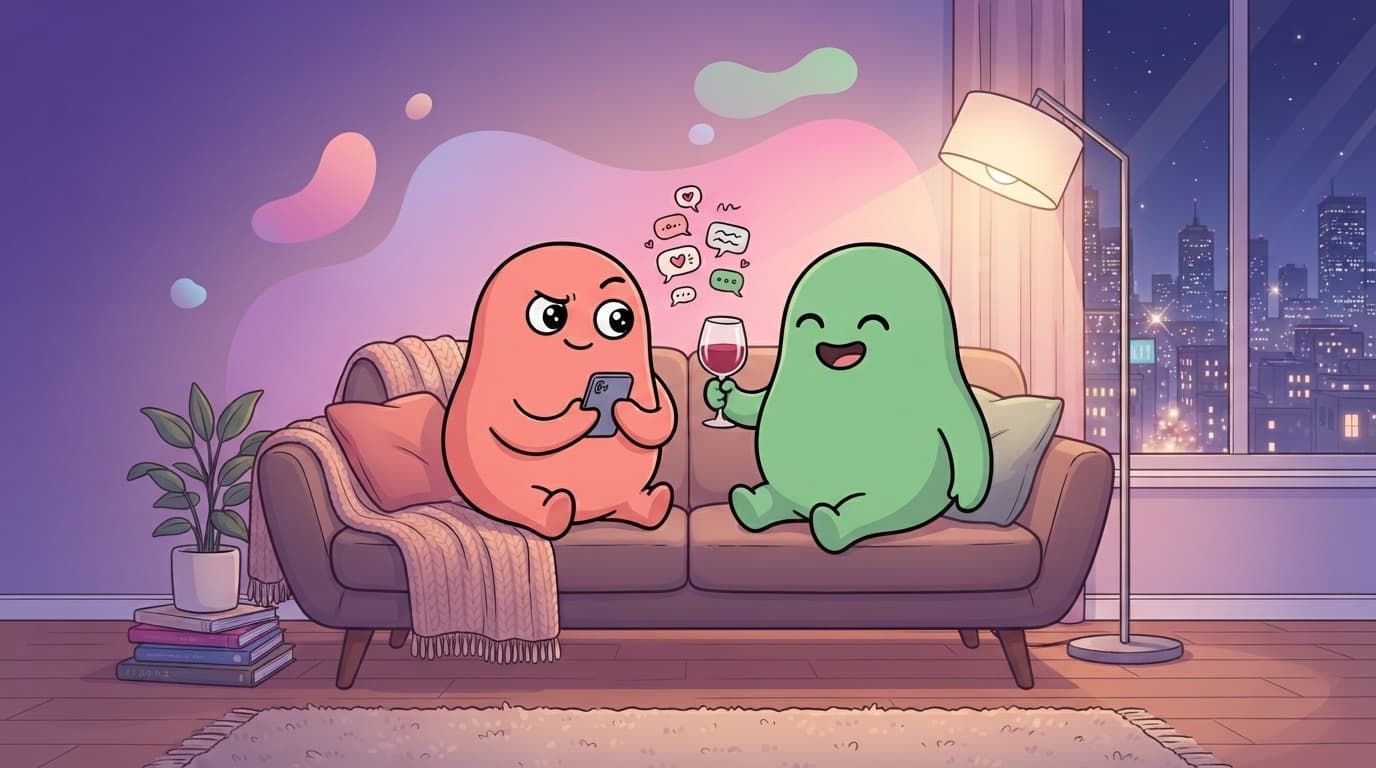
You've had a code word for years. Maybe it's "early night?" said with a very particular look. Then a creator on your feed says every couple trying something new should "pick a safe word first", and you two half-laugh on the sofa. Funny, because you talk about everything. Work, money, which friends are secretly on the rocks. And yet "can we try something different?" somehow feels like it'd land as a review of the last five years.
So, the difference. A code word is private shorthand between partners for wanting sex (or for "not tonight") without saying it plainly. A safe word is an agreed signal that means slow down or stop right now, used in the middle of something, usually something new. A code word opens a door. A safe word is the handle on the inside. Between them, wanting something new gets a lot less loaded.
Why does "let's try something" feel so much bigger than it used to?
Because you've built something. A few years in, there's a usual, so a new idea can sound like a verdict on the old ones, even when it's just curiosity.
Then there's the script queer culture hands you: desire should be endless, effortless and always on. Years in, a comfortable usual can feel like failing that script. But it was written for the first year of anything, or for a nightlife you both happily left behind. In a long relationship, wanting runs on conditions: a bit of novelty, a bit of nerve and enough safety to say the thing out loud. A usual isn't the opposite of desire. It's solid ground to try things from.
Peggy Kleinplatz, a clinical psychologist and sex therapist, studied how people describe their best sex, and being fully present kept coming up, alongside communicating well and taking risks together. Nothing on that list says "constantly". That's where the two words earn their keep. The code word makes asking light. The safe word makes trying safe.
Isn't a safe word only for serious kink?
You probably came up around leather nights, Pride and at least one friend who could explain the hanky code. Whether that scene was ever yours or not, it's easy to file safe words under "theirs, not ours".
But a safe word is just a brake you agreed on before you needed it. It works for a blindfold, for trying it somewhere other than the bed, for one of you being a bit more in charge than usual or for anything where you're not sure how it'll feel until you're in it. What counts as kinky is blurrier than the feed makes it look, and borrowing a good idea doesn't sign you up for anything.
And when you both know there's a clean way out, you stop half-watching each other for signs. You can actually lean in.
So how is it different from the word we already have?
Almost opposite jobs. One starts things, the other pauses them:
| Code word | Safe word |
|---|
| Purpose | Ask for sex (or turn it down) without spelling it out | Slow down or stop, instantly, no explaining |
| When it's used | Any time: over dinner, in a text, at a friend's party | During sex, especially when you're trying something new |
| Examples | "Early night?", "documentary?", a song from that trip | "Red", "yellow", "pineapple" |
| What happens when it's said | The other smiles and says yes, or "rain check" with zero hard feelings | Everything pauses straight away, then you check in with each other |
A code word can be waved off. A safe word can't. Nobody asks "are you sure?" It gets honoured on the spot, every time, which is exactly what makes it trustworthy.
How do we pick a safe word that actually works?
Pick it before anything starts, out loud, while you're both still clothed. Some options:
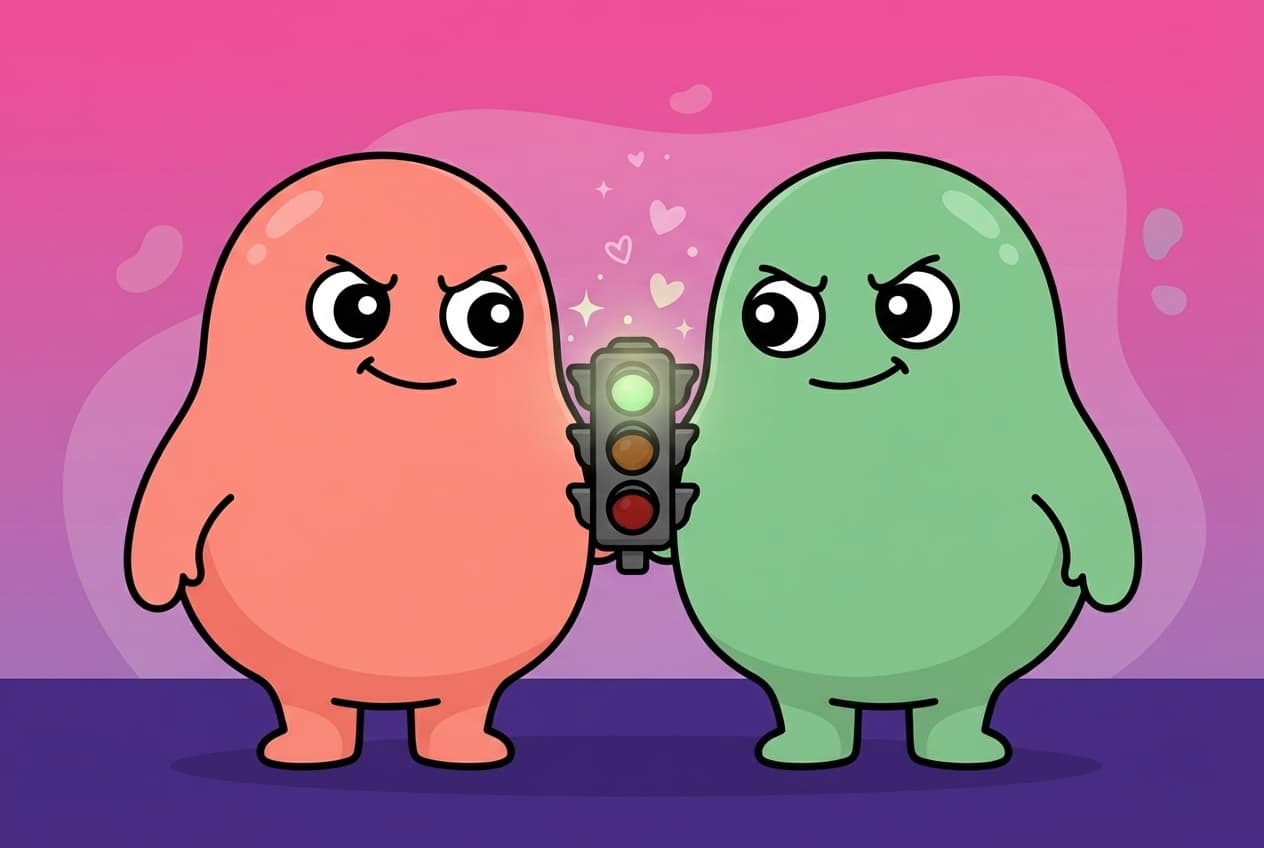
- The traffic-light system. Green means "yes, more of this". Yellow means "slow down, check in with me". Red means "stop now". Yellow gives you a middle gear, so you don't have to choose between carrying on and calling it off.
- One word you'd never say in bed. "Pineapple", "spreadsheet", the name of a city neither of you has been to. Silly is fine. Silly is good, even.
- A signal for when talking's tricky. Two firm taps on the arm, or letting go of a hand you've been holding.
Either of you can use it, and "no" and "stop" always count as no and stop. When it gets said, the next move is a softer one: a cuddle, some water, a "you good?" (if that sounds like aftercare between couples who've been together for years, that's because it is).
And a code word, can we just make one up?
You probably already have. The best ones are accidents that stuck. A few more:
- A fake plan. "Want to watch a documentary?" There will be no documentary.
- A shared reference. The hotel, the song, the storm, the thing on that trip nobody else will ever decode.
- A "not tonight" word. "Rain check" or a made-up word that means "I love you, I'm wrecked."
- A "what if" word. A silly word for "I've been wondering about something". It floats an idea without anyone having to make a speech, and it can be laughed off just as easily.
That last one is quietly the most useful: a little curiosity gets said sideways, with no big announcement. We've written more on growing a private language for sex as a couple if you want to go deeper.
Where does peek fit in?
Maybe you've tried the direct "so, anything you'd want to try?" chat and found it oddly deflating. Talking still matters. It's just easier when neither of you is holding the whole idea. In peek, the ideas come from the cards, not from either of you, so there's nothing personal to turn down. A match, which takes a yes or a maybe from both of you, is simply a nice thing to know. What you do with it, and when, is up to you two. There are date nights and little games in there too, for an evening that isn't the usual.
Key takeaways
- A code word is flirty shorthand for wanting sex (or not tonight). It can be waved off.
- A safe word is an agreed stop or slow-down signal. It's honoured instantly, no debate.
- The traffic-light system (green, yellow, red) gives you a middle gear and is easy to remember.
If one of you is curious, the hand-over can stay as light as a code word: "I downloaded this thing where we each swipe on our own phones. Want to try it this weekend?" peek is on the App Store and Google Play.
Frequently asked questions
What is a safe word for couples?
A word (or signal) you agree on ahead of time that means slow down or stop immediately. When either of you says it, everything pauses and you check in.
What are good safe word examples?
The traffic-light system is the classic: green for keep going, yellow for slow down, red for stop. Single words that would never come up in bed work too, like "pineapple" or "spreadsheet".
Can we use "stop" as our safe word?
You can. "Stop" always means stop, safe word or not. A separate word like "red" just makes the signal instant and impossible to misread mid-moment.
What happens after someone uses the safe word?
You pause, check in and look after each other. Talk it through another day and decide together whether to try it again.