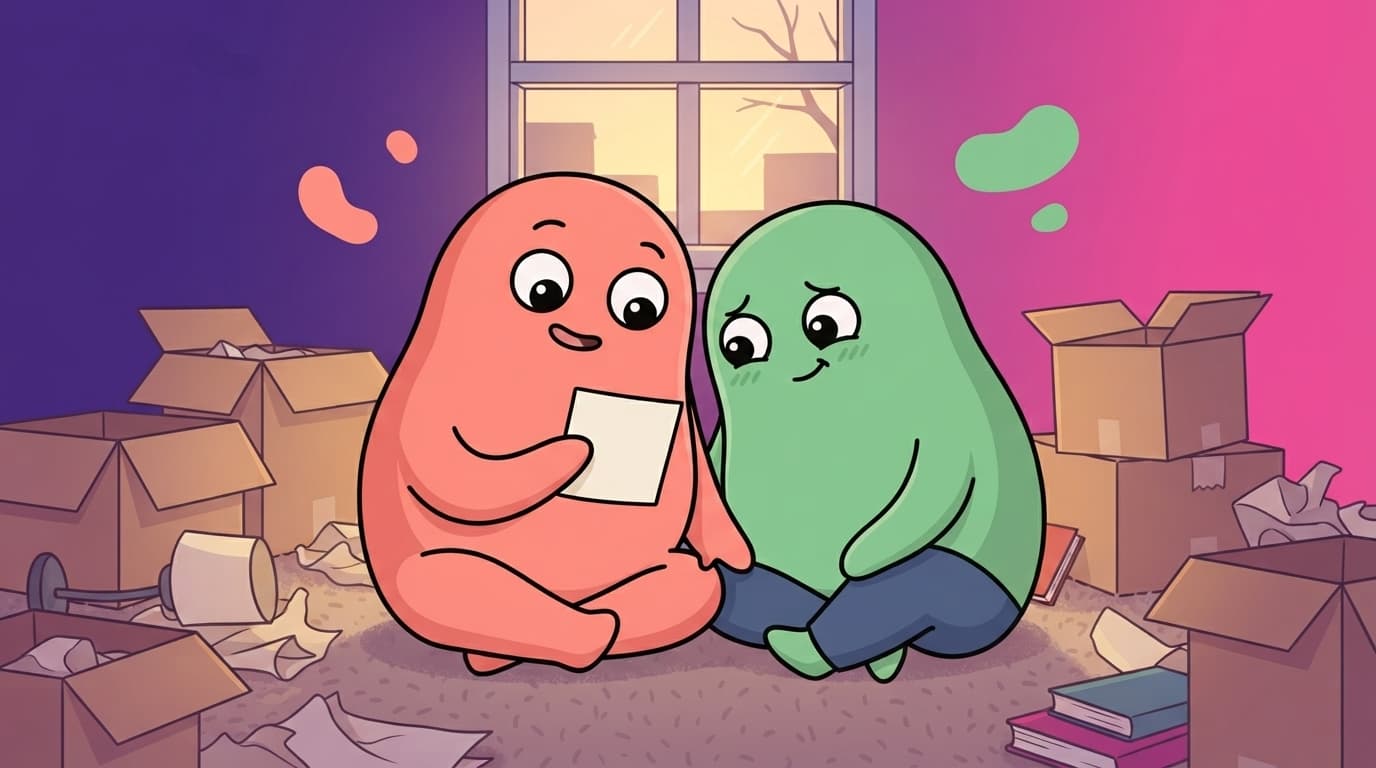
A year or so in, newly living together, the early free-for-all settled into something lovely but slightly same-y, you might be quietly wondering whether the stuff you're curious about makes you the kinky one or whether you're overthinking a perfectly normal itch. You're not overthinking it. You just don't have the words yet, and honestly, neither does anyone.
So here's the honest answer: there's no fixed line, and where you'd draw it says more about your history than about the thing itself. "Kinky" just means anything outside a couple's current default, and every couple's default is different. Blindfold, a bit of role-play, saying the quiet thought out loud: kinky to one pair, an ordinary Tuesday to another. So the useful question isn't "is this kinky", it's "do we both want to try it". The label is a distraction. What you're both curious about is the actual information.
Is there an actual definition of kinky, or is it just vibes?
It's mostly vibes, and that's not a cop-out. There's no clinical cutoff where vanilla ends and kinky begins. Broadly, people use "kink" for anything outside conventional, straight-down-the-middle sex: sensation play, restraint, role-play, power dynamics, a specific scenario that does it for you. But "conventional" is set by whoever's talking, so the whole thing floats.
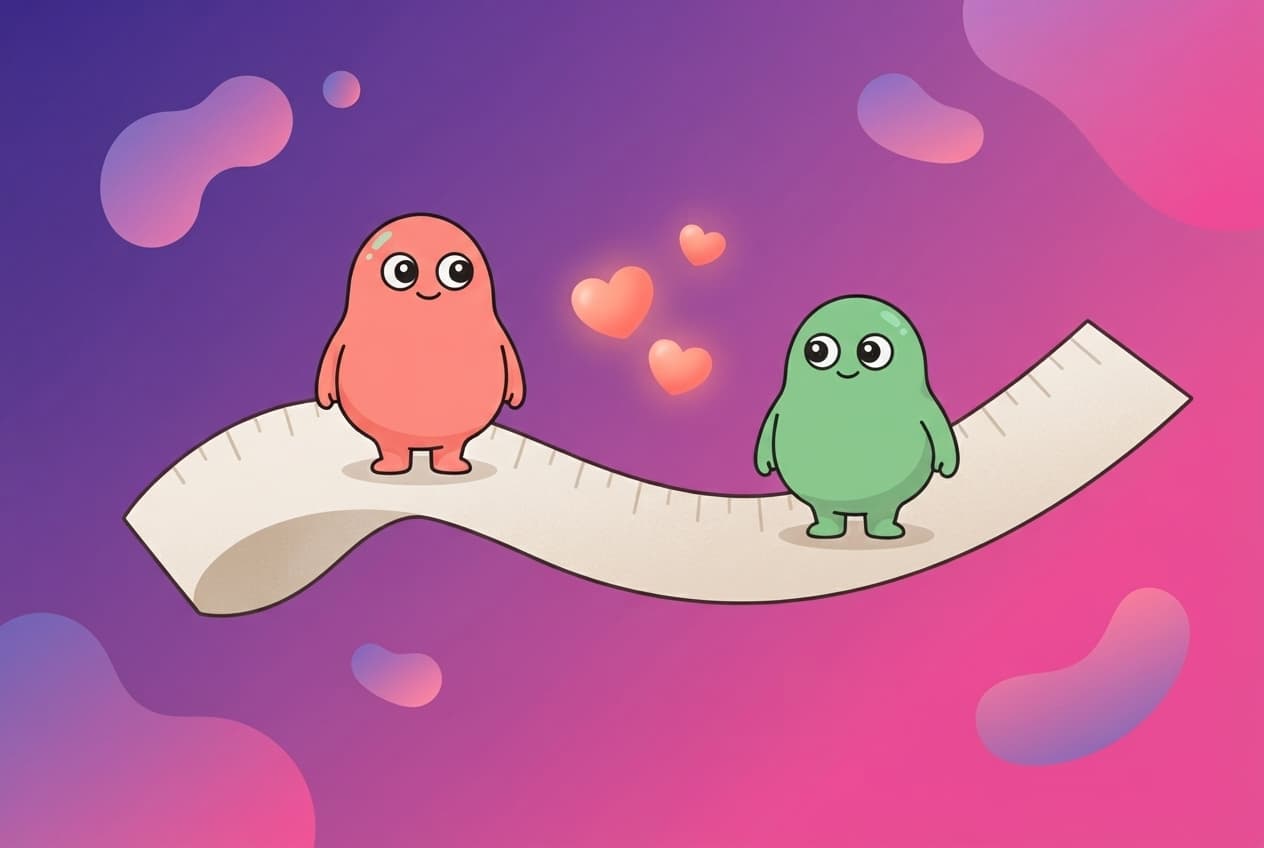
Which is why the label is a shaky place to plant a flag. Chantelle Otten, a psycho-sexologist, makes the case that kink isn't a line you're on the wrong side of, it's a spectrum, and being curious about something a little past your usual is a completely normal, healthy part of being a sexual person. Ask yourself "am I kinky or vanilla" and you get a dead end, because the honest answer is "compared to whom". What actually charges a moment is usually a bit of novelty, a little tension, something you didn't quite see coming, not any particular act. The spark lives in the surprise, not on some official kink list. Whether a thing has a name matters far less than whether it lights you up.
Does it even matter if what we're into is "kinky"?
Not really, and here's the freeing part. Whether your curiosity gets filed under kinky or vanilla changes nothing about whether it's worth exploring. The category is a description after the fact, not a permission slip.
The reason this trips people up is that "kinky" quietly implies a scoreboard: as if there's a normal amount of adventurous, and being above or below it means something about you. There isn't and it doesn't. The couples who report the best long-term sex aren't the ones with the wildest repertoire or the highest kink score. What they've got in common is presence, curiosity and a willingness to explore together. Connection over technique, every time. Nobody's grading the acts.
So you can skip the whole ranking exercise. You don't need to work out where you land on some imaginary spectrum before you're allowed to be curious. The only question that does any work is the small, specific one: is this a thing we'd both like to try. Everything else is just labelling. If that curiosity is pointed at a specific fantasy you've been sitting on, exploring fantasies together without the awkwardness picks up right where this leaves off.
How do we explore this without it feeling like a big loaded conversation?
This is the real snag, and it's fair. Early on, everything felt low-stakes, so anything got said. Now there's more to lose, and floating "so, I've been thinking about trying..." over the washing-up feels weirdly heavy, like a critique of everything you've done so far. It isn't, but it lands that way, so a lot goes unsaid and the script quietly sets.
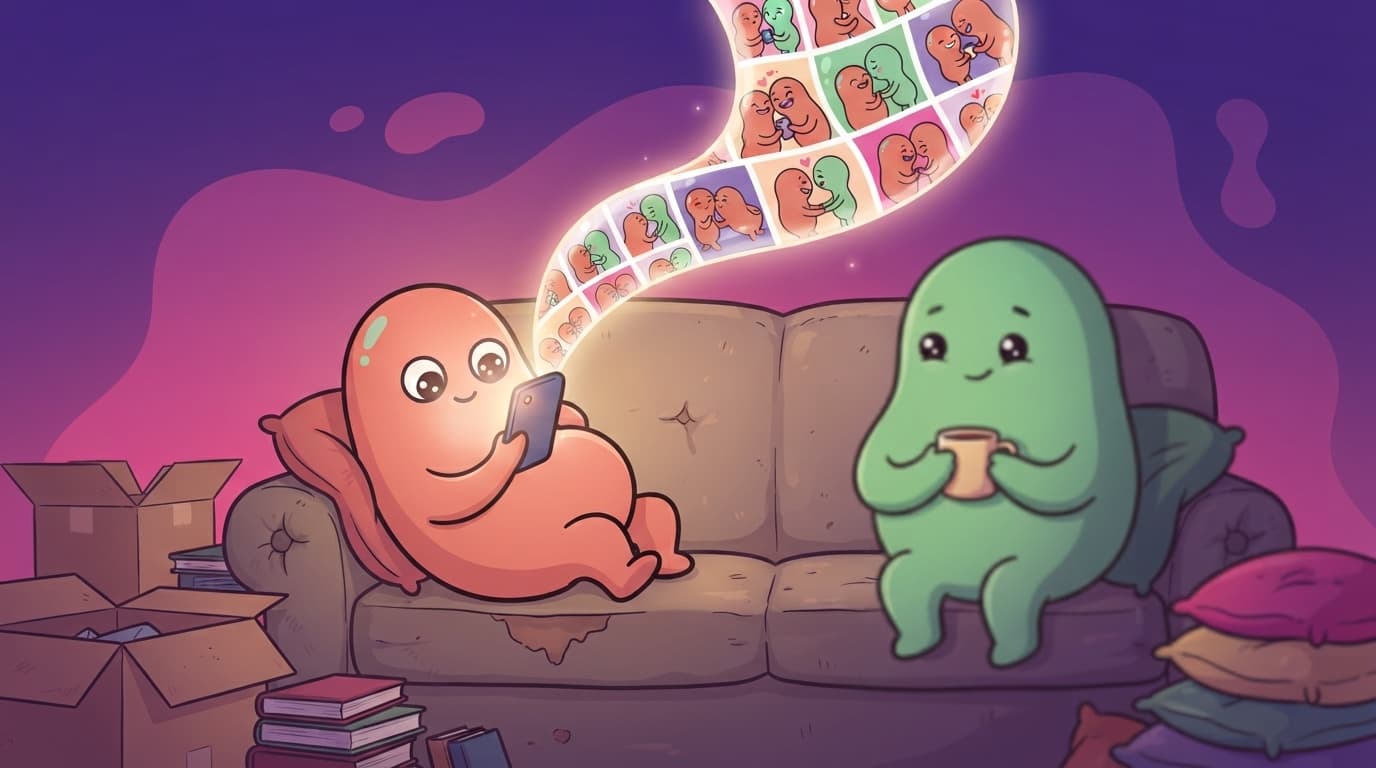
The way through isn't a braver conversation. It's a structure where nobody has to go first. Instead of one of you naming a curiosity out loud and waiting to see the other's face, you each answer privately, then only see the things you're both already curious about. Here's why that works when a talk doesn't:
- Nobody's exposed. You're not floating an idea and reading your partner's reaction in real time. You answer on your own, and only the overlap ever surfaces.
- No accidental critique. Because it isn't aimed at your partner, "I'm curious about this" can't read as "what we do now isn't enough". It's just honest, not a verdict.
- You build a shared vocabulary early. A match becomes a little reference point ("oh, so you're into that") before the patterns calcify, which is exactly the moment to be doing this.
- It stays light. It's a swipe, not a summit. No scheduling, no loaded sit-down, no scorecard, no one put on the spot.
- The reveal is a small mystery. Finding out you both landed on the same thing is a spark in itself, the little jolt of surprise that keeps familiar territory from going flat.
That last one matters more than it sounds. Desire runs on a bit of distance and mystery, and the cosy, know-you-completely closeness of living together can quietly flatten it. A private reveal sneaks a small unknown back into a person you otherwise know inside out. You still surprise each other. That's the good stuff.
If the harder part for you is the asking itself, our guide on how to initiate sex without it feeling like begging digs into the same move, taking the exposed moment off the table so wanting doesn't have to feel like pleading. And if you'd rather just get a read on each other first, how to find out what your partner wants in bed is the gentler on-ramp.
Key takeaways
- There's no fixed line for what counts as kinky in a relationship. It just means outside your current default, and every couple's default is different.
- "Am I kinky or vanilla" is a dead end. The only useful question is whether you both want to try a specific thing.
- The label implies a scoreboard that doesn't exist. The best long-term sex runs on connection and curiosity, not a high kink score.
- Explore without a loaded talk by changing the structure: answer privately, surface only mutual curiosity, keep nobody on the spot.
- A mutual reveal doubles as novelty, the little surprise that keeps a familiar relationship from going flat.
Curious what you'd both actually say yes to, minus the awkward opener? peek lets you each swipe privately, and only the things you both say yum to become a match you explore together. Nothing's shared until you both choose it. Download peek on the App Store or Google Play and find out what you're both curious about, in private first.
Frequently asked questions
Am I kinky if I'm curious about something but haven't tried it?
Curiosity doesn't come with a label attached. Wondering about something is just information about what might light you up, not a category you've joined. The only thing worth doing with the curiosity is finding out whether your partner shares it, and there's no threshold you have to clear first.
What's the difference between kinky and vanilla, really?
Mostly the perspective of whoever's using the words. "Vanilla" tends to mean conventional and "kinky" tends to mean outside that, but the middle of the road is set by each couple, so the same thing can be either. It's a description, not a diagnosis, and it tells you nothing about whether you'll enjoy it.
How do we tell each other what we're into without making it awkward?
Take the going-first out of it. Instead of one of you naming a curiosity and waiting for a reaction, you each answer privately and only see where you already overlap. That way nothing reads as a critique of what you do now, and you find out you're on the same page without anyone having to be the brave one.