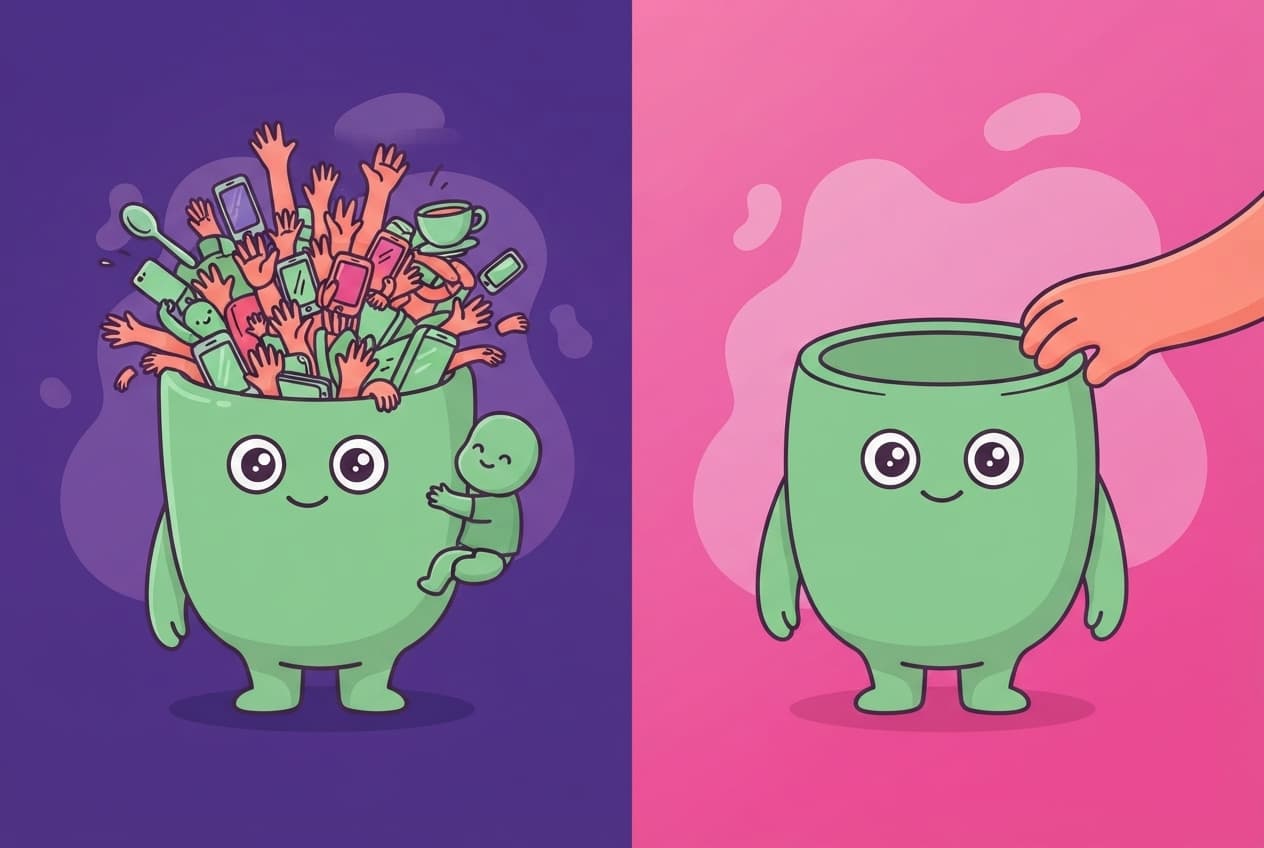
By the time the kids are finally down, you've been grabbed, climbed on, patted, tugged at and sat on since somewhere around six that morning. So when you drop onto the sofa and a hand lands on your knee, something in you flinches before your brain's even weighed in. It's not that you don't want them. It's that your skin clocked off an hour ago and nobody told your body the shift was over.
Here's the useful part. That flinch isn't your desire failing you. It's your body correctly reporting that there's nothing left in the tank tonight, and there's a genuinely quick way to top it back up before this becomes every single evening.
You love each other. You're a good team, the logistics run themselves, you've mostly got your sleep back. But somewhere in the small-kid years the wanting got filed under later and it's stayed there, quietly, without either of you deciding it, alongside a body that feels different since kids. You're not out of love. You're out of touch, in the most literal sense there is.
why does being touched all day switch off wanting to be touched at night?
Because touch has a ceiling, and small kids blow straight through it every day before lunch. Think of wanting as a seesaw between what turns you on and what shuts you down. Being needed for one more snack, an interrupted shower, a small body draped across you for an hour, the mental tally of who did bath time last night: all of that piles onto the off side. Feeling chosen rather than climbed on, a bit of novelty, closeness that isn't asking you for anything: that's what sits on the other side. Wanting is just whichever side is heavier by 9pm.
Most evenings, the off side is already stacked to the ceiling before your partner's said a word. So it was never that you'd stopped fancying them, even if every cuddle feels loaded. The switch got flipped hours earlier, by someone half your height who's already asleep down the hall.
is it normal to feel touched out and still be into my partner?
Completely, and it isn't a contradiction. The touch that wears you down all day and the touch you'd actually want at night are different currencies entirely, and small kids only ever pay in the first one. A toddler doesn't check how much you've got left before climbing onto it. By the time the house finally goes quiet your tank's already run dry, and your partner's hand arrives right after closing time. That's not you going cold. That's an empty cup with someone reaching in before it's had a chance to refill.
Karen Gurney, a clinical psychologist and psychosexologist, has written about this exact stretch of parenting: once kids are in the picture, the only version of sex still on offer often shrinks down to the rushed, half-asleep, everyone's-knackered kind, so of course wanting quietly checks out when that's the only thing on the menu. The way back isn't a smoother bedtime opener. It's making touch mean more than one thing again, so your body stops filing every hand under "one more job." If you want the longer version of finding each other again after the baby years, this piece on getting close again after kids walks through it gently.
how do we get back to wanting each other without adding one more chore?
You take the pressure off, and you move the wanting earlier than the bedroom. For most couples a few years in, wanting doesn't strike out of nowhere. It shows up in response to a bit of play and safety, and it needs some room in the cup to work with, not a body that's already spent. Guarding that room is the whole move in how busy parents make time for intimacy without it becoming a chore.
A few low-stakes ways in, none of which are homework:
- Name it out loud, once. "I'm not not into you, I'm just touched out by bedtime" changes everything. Their hand at 9pm stops being a test you're failing.
- Move the flirt earlier. A text at 2pm lands on a tank that's still got something in it. Wanting gets to build all afternoon instead of getting ambushed at lights-out.
- Let some touch ask for nothing. Not every hand on you has to be a down payment on something. Touch that expects nothing back is what lets your body ease off the brakes in the first place, and it's a close cousin of being appreciated for yourself rather than for what you got done.
- Make the first move mutual and low-stakes. The awkward part is going first when you're not even sure they're up for it. Take that guesswork out and the door tends to open on its own.
That last one is where most couples stall. Nobody wants to be the one reaching across a dark room on a maybe, which is exactly the gap this piece on making the first move without the awkward guesswork is built to close.
This is basically why peek works the way it does. You each swipe privately through cards, and nothing gets shared until you've both landed on the same yum. Nobody has to go first. Nobody risks a no in the dark. The wanting gets to happen off to the side, earlier in the day, exactly when a touched-out brake is still loose enough to move.
key takeaways
- Being touched out and not wanting sex is your brakes maxed for the day, not your desire disappearing.
- Loving your partner and flinching at a 9pm hand aren't in conflict. The touch that drains you all day and the touch you'd actually want are different currencies.
- Wanting in most long-term couples shows up in response to play and safety. It needs a little room, not more willpower.
- Move the wanting earlier than the bedroom, take the pressure off going first and let some touch ask for nothing back.
- Making the first move mutual takes the guesswork out, and that's usually the fastest way the door reopens.
If the nightly flinch has become your whole evening, peek is a soft way back in. You each swipe on your own in private, and a shared yum becomes something you explore together, on your own timeline, with nobody having to go first. Download peek on the App Store or Google Play and start where the pressure's already off.
frequently asked questions
what does "touched out" actually mean?
It's the wrung-out feeling of having been physically needed all day, usually by small kids, until any extra touch, even a loving one, feels like too much. Your nervous system is flooded with input and has hit its ceiling for the day. It eases once you get a bit of space where nothing and nobody is touching you.
does being touched out mean something's off with my sex drive?
No. It usually means the off side of the seesaw is maxed, not that your desire has gone anywhere. Exhaustion and being over-touched swamp the turn-ons for a while, that's all. Ease off the off side and wanting tends to come back on its own.
how do we start again if bedtime is always a no?
Stop trying to spark it at bedtime, when the off side is at its heaviest. Move a little flirtation into the day instead, take the pressure off going first and let closeness build with no expectation attached. peek is one low-stakes way to do that, since you each swipe privately and only a shared yum ever gets revealed.
is this just a phase with young kids?
Often, yes. As kids get more independent your capacity for touch refills faster and the touched-out feeling eases. The couples who come through it best keep a small, low-pressure thread of playfulness going rather than waiting for it to come back on its own.